
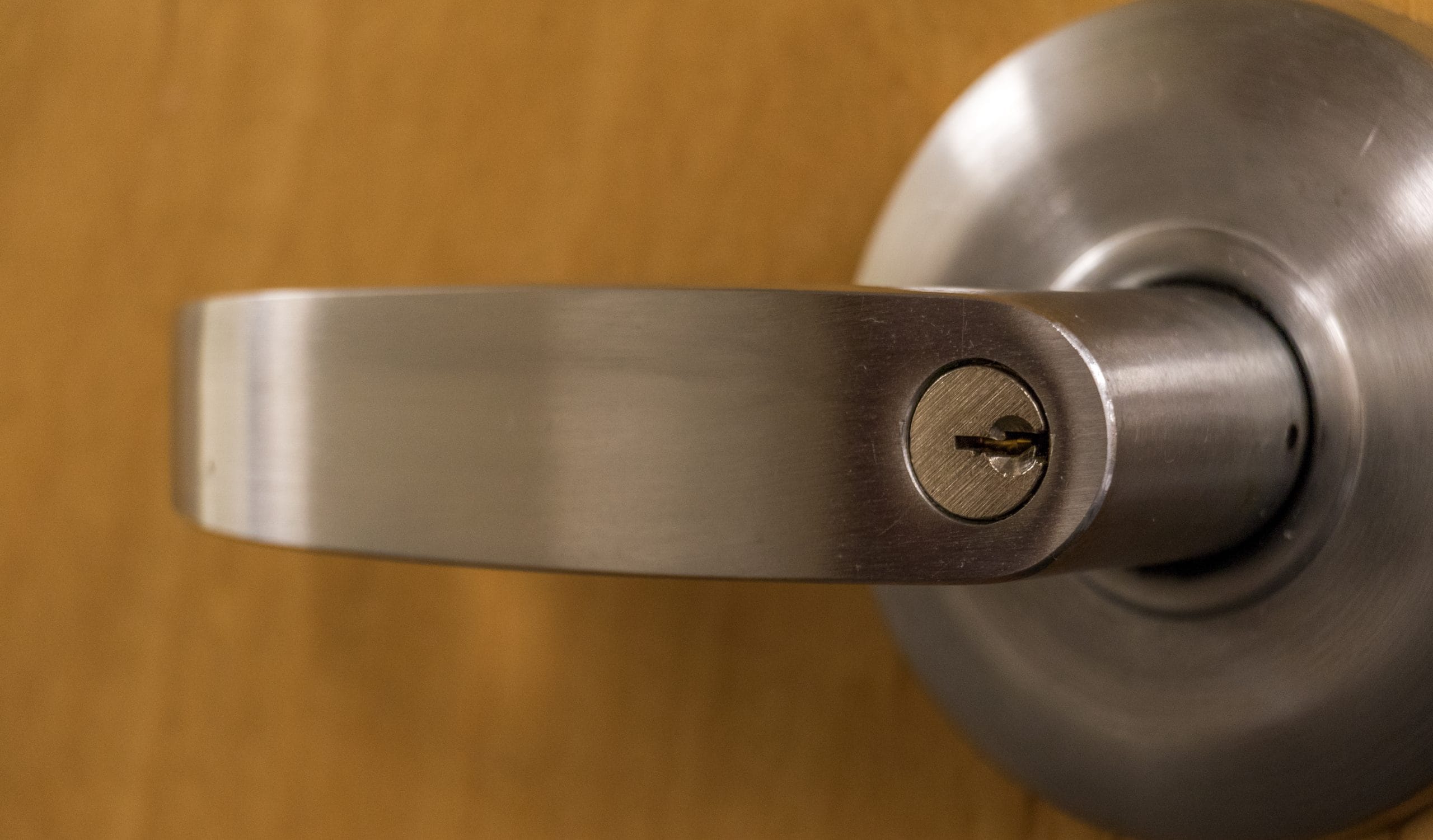
If you are standing outside your apartment door at 2 AM without your keys, the safest, fastest way to get back inside is to call a verified 24/7 emergency locksmith who specializes in Manhattan walk-ups — like our team at ALO Locksmith Manhattan at (646) 583-3320. Do not break a window, do not crawl down a fire escape, and do not kick in the door. In most cases we can have you back inside within 20 to 30 minutes with zero damage to your lock or door, and at a cost that respects a tenant’s budget. This guide walks you through every step of surviving a late-night lockout in a Manhattan apartment building while protecting your rights, your safety, and your wallet.
We have responded to thousands of after-midnight lockouts in prewar walk-ups, high-rise doorman buildings, and everything in between. This is the exact protocol we teach our own families, refined through 15 years of hands-on experience in every Manhattan neighborhood.
Table of Contents
Immediate Steps the Moment You Realize You Are Locked Out
When the elevator (or staircase) stops and you pat your pockets only to feel nothing but your phone, the first 60 seconds matter most.
-
Do not panic. Cold adrenaline leads to costly mistakes. Breathe, step to the side of the hallway or street, and assess.
-
Confirm you are truly locked out. Try the door once more. Check all pockets, your bag, and any common slip spots (inside your phone case, wallet, jacket lining). Ask anyone with you to double-check.
-
Check for an alternative entry point. If you are in a ground-floor or garden-level unit with a secured, locked window you can reach without a ladder, do not force it. Note it only as potential access for a professional, not for DIY.
-
Locate a safe waiting area. In the middle of the night, hallway safety varies. If your building lobby is locked and you are in a stairwell or exterior stoop, move to a well-lit, visible spot. Do not loiter in dark hallways or alleys. If the weather is extreme, find the nearest 24-hour deli or building lobby if accessible.
Answer-first takeaway: A professional locksmith call placed within the first two minutes typically gets you inside faster than any improvised solution, and prevents additional security or legal issues.
Manhattan Tenant Rights During a Lockout
Many renters do not realize that a lockout, especially at an odd hour, involves specific legal and lease provisions. Knowing these gives you leverage and protects you from unnecessary fines or lease violations.
-
Right to Access Your Unit: Under the NYC Housing Maintenance Code and standard lease agreements, you have a right to lawful re-entry. No landlord can permanently deny you access to your own rented dwelling over a lockout.
-
Super and Building Management Availability: Most Manhattan buildings with 8 or more units are required to provide either an on-site super or an emergency contact. However, that emergency contact is not legally required to perform lockout assistance beyond providing a key if they hold a copy. Many supers will only respond to lockouts during business hours unless it is a life-safety emergency. Check your lease rider for the specific lockout policy; some charge a fee (often 50 to 150 dollars) for after-hours key access, and that response can take 45 minutes to several hours.
-
Landlord Key Deposit: New York law allows landlords to retain a copy of your apartment key. They can use it to let you in, but only with proper authorization. Never rely solely on this; many management offices do not answer phones at 2 AM.
-
Do Not Damage Landlord Property: Tenants are financially responsible for any damage caused to the door, frame, or lock during a forced entry. A broken door jamb in a Manhattan apartment can cost 400 to 1,200 dollars to repair professionally, which your security deposit will cover.
We have seen tenants incur 800-dollar repair bills because they attempted to kick in their own door at 2 AM, only to then still need a locksmith to re-secure the unit. A direct locksmith call eliminates that risk.
Super vs. 24/7 Locksmith: A Quick Decision Table
The choice between waiting for building staff and calling a pro directly often determines how soon you sleep. Use this table to decide in 10 seconds.
| Situation | Best Action | Typical Response Time | Typical Cost in Dollars |
|---|---|---|---|
| Doorman building with in-house maintenance on duty 24/7 | Ask the doorman to radio maintenance; they may have a master key | 5 to 20 minutes | Often free or under 50 dollars |
| Non-doorman building, super lives on-site, you have their emergency number | Call the super first; they may respond for a tip or fee | 15 to 60 minutes | 20 to 100 dollars tip/fee |
| Super is off-site, unreachable, or explicitly says they will not come out | Call ALO Locksmith Manhattan: (646) 583-3320 | 20 to 30 minutes | Transparent flat-rate pricing (see cost section) |
| High-security door with Medeco or Mul-T-Lock | Do not attempt any bypass; call a locksmith with commercial-grade tools | 20 to 30 minutes | Varies by cylinder; we quote upfront |
| You suspect lock tampering or lost keys in a shared hallway | Priority safety call to locksmith to re-key or replace cylinder immediately | 20 to 30 minutes | Re-key starts around 95 dollars |
Our team regularly arrives faster than an off-site super can get dressed and commute, which is why many Manhattan tenants call us first.
Why DIY Entry Methods Are a Losing Gamble in NYC Buildings
The internet is filled with dangerous advice. Here is what we categorically advise against, based on real repair jobs we have completed after failed DIY attempts.
-
Credit Card / Shim Method: Does not work on modern deadlatches or deadbolts. Manhattan apartment doors are often solid-core with tight frames and anti-shim pins. Attempting this will damage the card, fray the weatherstripping, and get you nowhere.
-
Fire Escape Entry: Climbing a fire escape in the dark is a life-threatening risk. It is also frequently illegal unless there is a true fire emergency, and you may be seen and reported for attempted burglary. We have witnessed tenants cited by NYPD.
-
Removing the Door Hinges: Exterior apartment door hinges in NYC are almost always security hinges with non-removable pins, or the hinges are on the inside. You cannot pop the pins from the hallway side.
-
Bumping or Picking Without Training: Using cheap lock-picking tools from online retailers almost always results in a broken pick stuck inside the keyway, which turns a simple lockout into a 200-dollar lock extraction and replacement.
The only reliable non-destructive entry method for a locked apartment door is using professional-grade tools in trained hands. That is what we do every day.
What a Professional Manhattan Locksmith Actually Does at 2 AM
When you call ALO Locksmith Manhattan at (646) 583-3320 for a late-night walk-up lockout, here is the sequence you can expect. Understanding the process removes anxiety and sets a clear bar for any locksmith you consider.
-
Verification and Quote: We confirm your building address, apartment number, and the type of door/lock you have if you know it. We give you a firm, all-inclusive price in dollars over the phone — no bait-and-switch.
-
Dispatch: Our technician, fully insured and in a marked vehicle, dispatches immediately from our Manhattan base. Average ETA between 14th Street and 96th Street is 22 minutes.
-
Arrival and ID Check: The technician arrives in uniform with company ID. We ask for proof of tenancy — a lease document, utility bill with your name, or government ID with the address. This protects you and your building. If you do not have physical ID on you (it is inside the locked apartment), we have legal protocols including a neighbor or building staff witness, and we retrieve the ID upon entry.
-
Non-Destructive Entry: Using specialized picks, bump keys calibrated for NYC residential cylinders, or an under-the-door tool for specific latch types, we open the door without damaging the lock or door frame. 98 percent of our late-night lockouts are resolved without drilling.
-
Post-Entry Check and Key Retrieval: Once open, we help you locate your keys. If keys are truly lost inside, we can cut new keys on the spot from your lock cylinder code or existing copy.
-
Security Verification: We test the lock and door closer to ensure everything functions correctly. If your cylinder is worn or you feel unsafe, we can re-key the lock right then for a pre-agreed fee.
Real Cost Transparency: 2026 Late-Night Lockout Pricing in Manhattan
We believe publishing a transparent cost guide helps tenants avoid being scammed. The prices below reflect typical 2026 rates for a legitimate, insured Manhattan locksmith service at night.
| Service | Typical After-Hours Range (in dollars) | ALO Locksmith Starting Price (in dollars) | Notes |
|---|---|---|---|
| Basic lockout (standard pin tumbler cylinder) | 95 – 250 | 125 | No damage, door opened in minutes |
| High-security lockout (Medeco, Mul-T-Lock, Abloy) | 150 – 350 | 175 | Requires specialized decoding tools |
| Lockout with lost keys and re-key | 150 – 300 | 155 plus cylinder fee | Adds security if keys are missing |
| Damaged lock extraction / broken key removal | 120 – 280 | 135 | If key broke off in the cylinder |
| Door frame or alignment repair after forced entry | 400 – 1,200+ | Case-by-case estimate | Avoid this by never forcing the door |
All prices include the service call, labor, and a working lock. We never add surprise “after-midnight” surcharges beyond the quoted price. Most competitors we benchmark against hide fees until the work is done. That is why we price clearly over the phone.
How to Identify and Avoid a 2 AM Locksmith Scam
New York City sees a high volume of locksmith fraud, especially during overnight hours. We want you to recognize the red flags before dialing.
-
Too-Good-To-Be-True Online Ads: If a Google ad quotes “15 dollars lockout service,” it is a bait-and-switch. The actual price after drilling and replacing a perfectly good lock will exceed 400 dollars.
-
Unmarked Vehicles and No ID: Legitimate locksmiths in NYC must display their company name on the vehicle and carry identification. If the technician pulls up in a personal car and cannot produce a locksmith license or company ID, refuse service.
-
Drilling the Lock Immediately: Drilling is the last resort, not the first step. A skilled technician can pick or bypass the vast majority of Manhattan apartment locks. Drilling destroys the cylinder, forcing you into a costly replacement and possibly a new set of keys if the lock is part of a master system. We drill in fewer than 2 percent of lockouts, and only with your explicit consent after explaining why it is necessary.
-
Vague Pricing and Pressure: If they will not quote a firm price over the phone or say “we will see when we get there,” hang up. You should know the maximum you will pay before they dispatch.
-
No Local Address: Verify the locksmith has a real physical address in Manhattan or nearby, not just a call center routing to an out-of-state operator. ALO Locksmith is based in Manhattan, not a virtual office.
Special Considerations for Pre-War Walk-Ups and Modern High-Rises
Manhattan’s building stock ranges from 1890s tenements to glass towers. Each presents unique lockout challenges.
Pre-War Walk-Ups:
-
Rim locks and mortise locks are common. These often have stubborn, decades-old mechanisms that require finesse, not force.
-
Door frames can be brittle. We use custom cushioning to prevent frame cracking during tool placement.
-
Stairwell lighting is often dim. We carry high-lumen portable lights to work safely without disturbing neighbors.
-
Building intercoms: If you are locked out of the street-level door, we can still gain access to the building through legal intercom bypass methods or working with another tenant to be buzzed in.
Doorman Buildings and High-Security Access:
-
Concierge or security desks can usually verify your identity and grant elevator access. We coordinate with them.
-
Electronic fobs and keycard systems: We do not reprogram building systems, but we can access your individual apartment door if it uses a mechanical override keyway.
-
High-security cylinders: Our technicians carry additional decoding equipment specifically for Medeco, Mul-T-Lock, and ASSA cylinders frequently installed in luxury buildings.
Seasonal Lockout Patterns and How to Prepare
Our dispatch data across 15 years reveals clear seasonal spikes. Knowing them can help you take preventive action.
-
Winter (December – February): Lockouts increase 35 percent, often because tenants rush out to grab deliveries or walk dogs in cold weather without grabbing keys. Frozen locks are another factor; we apply cold-weather lock lubricant. Never pour hot water on a frozen lock.
-
Summer (June – August): Lockouts rise on weekend nights when social schedules are unpredictable. Keys get lost in parks, bars, and ride-shares.
-
Moving Season (August 1st and September 1st): A chaotic time when new keys are not yet duplicated, or tenants accidentally lock themselves out while hauling boxes. Schedule key duplication with us before moving day.
We recommend every Manhattan tenant do this tomorrow: have at least two spare keys cut and store one with a trusted neighbor or in a secure, non-obvious location inside the building (not under a mat). If your building permits, install a small key lockbox that meets fire code.
When a Lockout Requires a Lock Change or Re-Key
Sometimes a lockout is not just about missing keys. Security must be part of the conversation.
-
Lost Keys with Identifying Information: If your keys were attached to something with your address, re-key all locks before you sleep. We have done this at 3 AM many times.
-
After a Breakup or Roommate Dispute: We perform same-night re-keys for tenants who need to remove an ex-partner’s or former roommate’s access. This is a legally sensitive process; we follow strict verification protocols.
-
Keys Stolen: File a police report and call us for an emergency re-key. NYC precincts will document the incident, which is important for insurance and lease protection.
Our re-key service during a lockout adds minimal time and provides immediate peace of mind.
Our Unique Insight: The “Neighbor Key” Network That Saves Hours
Through thousands of service calls, we have noticed a pattern many guides overlook: the fastest non-locksmith solution is often a neighbor who holds your spare key, but only if you have proactively established that relationship. We advise building a small “key trust” with one neighbor on your floor. This costs nothing, provides a zero-minute entry option when you forget your keys, and works even if your phone is dead. We still recommend having our number saved in your phone as a backup — the network is not foolproof if your neighbor is out of town.
Frequently Asked Questions About 2 AM Lockouts in Manhattan
Is a landlord required to let me in if I am locked out at night?
No. Landlords must provide a habitable living space, but a lockout is considered tenant-caused. Unless your lease or building policy states 24-hour lockout assistance, the landlord is not obligated to send someone in the middle of the night. Many will assist during business hours, but at 2 AM you are often on your own. A 24/7 locksmith is your most reliable option.
How long does a Manhattan locksmith take to arrive at 2 AM?
From our Manhattan dispatch base, the average arrival time is 22 minutes across neighborhoods from Battery Park to Harlem. Certain areas with heavy nightlife traffic or NYPD checkpoints can add 5 to 10 minutes. We provide real-time ETA updates when you call.
Will my door or lock be damaged during the unlock?
With modern non-destructive entry techniques, damage is extremely rare. We open over 98 percent of Manhattan apartment locks without drilling or scratching. If drilling is unavoidable due to a severe lock malfunction, we will explain why and get your approval first.
How much should a 2 AM lockout cost in Manhattan?
An honest, all-inclusive price typically ranges from 95 to 175 dollars for a standard lockout, depending on lock type. Beware of quotes below 50 dollars, as they are often scams that balloon to 400 dollars or more. We provide a firm price by phone before dispatching a technician.
Do I need to show ID to a locksmith to get into my apartment?
Yes. A legitimate locksmith will verify your tenancy to protect the property. If your ID is locked inside, we accept alternative proof such as a signed lease on your phone, a bill with the address, or a video call with a roommate or landlord. We never open a door without confirmation.
Can a locksmith re-key my lock in the middle of the night if I feel unsafe?
Absolutely. We carry pinning kits and key blanks for all major residential lock brands. A full re-key during a lockout typically adds 15 to 20 minutes and can be quoted and completed before we leave.
What if I am locked out of my building entrance, not just my apartment?
We can assist. For street-level doors with intercom systems, we often can bypass the lock mechanically without damaging the intercom hardware. We work with the intercom system’s override where permitted.
How can I prevent getting locked out again in the future?
-
Duplicate keys: Keep a spare with a trusted neighbor or in a fire-code-approved key lockbox.
-
Install a smart lock: Many Manhattan buildings allow retrofit smart locks that use codes or phone access, while preserving the original deadbolt for management access.
-
Save our number: (646) 583-3320. A two-second decision in your contacts can save you hours of stress.
Our Commitment to Manhattan Tenants
We have served this city’s residents for over 15 years because we treat every 2 AM call as if we are helping a friend. Our technicians are background-checked, extensively trained on pre-war and modern lock systems, and carry full insurance. We show up with advanced tools and a no-damage commitment. Next time you are stuck in the hallway, do not risk your security deposit or your safety. Call ALO Locksmith Manhattan at (646) 583-3320, and we will have you back inside, safely, in less time than it takes to wait out an unseen super.
Sources:
-
NYC Housing Maintenance Code, Tenant’s Rights Guide, NYC Department of Housing Preservation and Development
-
NYC Department of Consumer and Worker Protection, Home Improvement and Locksmith Scams Advisory
People Also Ask
In New York City, rent increases are regulated, especially for rent-stabilized apartments. For 2024, the Rent Guidelines Board has set a maximum increase of 3% for one-year leases and 2.75% for two-year leases on stabilized units. A $300 increase would likely exceed these limits unless your unit is not rent-stabilized or you are in a market-rate apartment with no legal cap. Landlords must provide proper notice, typically 30 days for increases under 5% or 90 days for larger ones. If you suspect an illegal hike, you can contact the New York State Division of Housing and Community Renewal. For personalized advice, ALO Locksmith Services Manhattan NYC can recommend a tenant rights attorney, though we primarily handle security services.
When dealing with your landlord in Manhattan, avoid making threats or statements that could be perceived as hostile, such as "I'll withhold rent" or "I'll break the lease without notice." These can escalate conflicts and lead to legal issues. Instead, communicate calmly and professionally. For example, if you are locked out of your apartment, do not say "I'll break the door down," as this could damage property and violate your lease. Contacting a professional service like ALO Locksmith Services Manhattan NYC for a safe, non-destructive entry is a better approach. Also, avoid making demands without documentation, as verbal agreements are hard to enforce. Stick to factual, respectful language to maintain a positive landlord-tenant relationship.
