
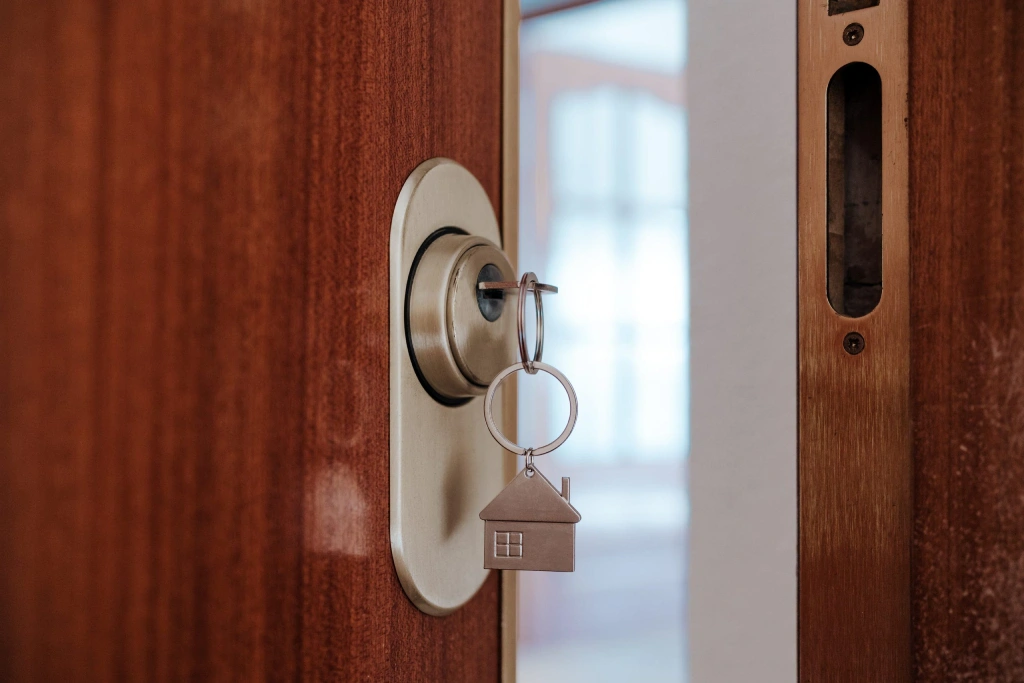
Ever had that heart-sinking moment when you hear your front door click shut, and you just know your keys are laughing at you from the kitchen counter? Or maybe you’ve rushed out to your car in a pouring NYC rainstorm, only to play a frantic game of “pat-down bingo” with empty pockets? We’ve been there, and let’s be honest, it never happens at a convenient time. It’s usually when you’re already late, it’s freezing, or you have a car full of groceries that are slowly morphing into soup. That’s the unglamorous reality of lockouts, and in a city that never sleeps, your locksmith sure better not, either.
Here’s the thing we’ve learned from years on the ground in Manhattan: security isn’t just about getting back in. It’s about what you’re getting back into. Is that flimsy lock from your landlord’s 1980s renovation actually doing anything but giving you a false sense of safety? We’re going to chat about everything from that panicked search for the “nearest locksmith” to why investing in good hardware is cheaper than a burglary. And yeah, we’ll throw in some insider tips, a few horror stories (with happy endings, don’t worry), and why choosing the right local expert matters more than just going with the lowest price.
Your Quick-Start Guide to Not Panicking in a Security Crisis
First rule of Lock Club: breathe. The second rule is knowing who to call before you need them. In an emergency, your brain goes fuzzy. You’ll google “locksmith near me” and pray the first result isn’t a scam. IMO, that’s playing roulette with your safety and your wallet.
We built ALO Locksmith in Manhattan for this exact reason. When you’re locked out of your car at 2 AM in the Financial District or your restaurant’s deadbolt fails just before the dinner rush, you need a team that’s fast, local, and transparent. You need a real human who shows up in a marked vehicle, gives you a clear cost upfront, and gets you back to your life. That’s our everyday. So, save our number now—consider it a tiny insurance policy. 🙂
The Residential Rundown: Your Home Isn’t a Fortress (Yet)
Let’s talk about your apartment or brownstone. That standard lock installation most builders use? It’s often the security equivalent of a “Beware of Dog” sign when you own a goldfish. It might deter the laziest intruder, but that’s about it.
We see it all the time. A client calls us after a scare, and we find they have a basic, single-cylinder deadbolt in a hollow-core door. It’s like putting a superhero lock on a cardboard box. For true peace of mind, we always recommend a layered approach:
- Upgrade the Hardware: Swap out for high-security locks with features like drill-resistant plates, hardened steel bolts, and restricted keyways. This means no one can duplicate your key at the hardware store down the block.
- Reinforce the Door: A $300 lock on a $50 door frame is pointless. We often install heavy-duty strike plates with three-inch screws that anchor into the wall stud, not just the flimsy door jamb.
- Embrace the Tech (Wisely): Smart keys and keyless entry are fantastic for convenience. No more hiding a key under the fake rock (we all see it, by the way). But not all smart locks are created equal. We prefer models with a physical key override (for when the Wi-Fi dies) and robust encryption.
The goal isn’t to turn your home into a vault; it’s to make it the hardest target on the block. FYI, a lock replacement for a stronger system is a one-time cost that pays for itself in sleepless nights you won’t have.
Commercial & Retail Security: Protecting Your Livelihood
If you run a business in NYC—be it a chic office in Midtown, a bustling restaurant in the Village, or a boutique shop in SoHo—your security needs are a whole different beast. It’s not just about keeping bad guys out; it’s about managing access for employees, vendors, and cleaners, all while looking professional.
A flimsy lock on your stock room door is an invitation. And a malfunctioning gate lock in your rear alley? That’s just asking for trouble. We work with commercial clients to create systems that make sense:
- Access Control: Who needs to get in, where, and when? We can set up master key systems for managers and individual keys for staff, so you’re not re-keying every time someone leaves.
- High-Traffic Durability: The lock on a busy office door gets cycled hundreds of times a week. We install commercial-grade hardware built to withstand that punishment for years, not months.
- After-Hours Peace: We integrate robust deadbolts, gate locks, and even high-security locks for sensitive areas like server rooms or cash offices.
The price of a professional commercial security audit from a team like ours is trivial compared to the cost of a break-in, lost inventory, or compromised data. It’s a no-brainer business expense.
The Car Locksmith Saga: More Than Just a Lockout
Ah, the car locksmith call. This is where the real “emergency” feels hit. Your key is in the ignition, your engine might even be running, and you’re standing on the sidewalk in your pajamas. It’s a special kind of frustration.
But modern vehicles are rolling computers. That little FOB key in your pocket isn’t just a metal cut; it’s a programmed transponder that talks to your car’s immobilizer system. Lose it, and you’re not just locked out—you’re potentially stranded. Here’s a quick comparison of common car locksmith scenarios:
| Scenario | The Quick Fix | The Smart, Long-Term Solution |
|---|---|---|
| Lockout (Key Inside) | We perform a non-destructive entry to get you back in fast. | We recommend keeping a spare FOB key in a magnetic box under the car or with a trusted nearby friend. |
| Lost/Stolen Key | We can cut and program a new key on the spot for most makes/models. | We program two new keys immediately. Having only one is a huge risk—if you lose it, the cost skyrockets. |
| Broken Key in Ignition | We extract the broken piece and cut a new metal key. | We assess why it broke (worn ignition cylinder?) and recommend a full lock replacement to prevent recurrence. |
The moral of the story? Always have a spare. And make sure your nearest go-to locksmith has the expertise and equipment to handle your specific vehicle’s electronics. At ALO Locksmith, our car locksmith vans are rolling workshops with the tools to get you back on the road, not just into your car.
Answering Your Burning Security Questions
Let’s tackle some of the questions we hear daily.
1. “Why are locksmith service quotes so variable? How do I avoid getting scammed?”
Great question. The variation usually comes from hidden fees. A super lowball price over the phone often balloons with “service fees,” “after-hours charges,” and “mileage costs” once the tech arrives. A reputable company like ours will give you a clear, upfront quote before any work starts. We operate in Manhattan, so our “service area” fee is just… being in the city. Look for local, established businesses with real addresses and reviews. If they can’t give you a straight answer on the cost, hang up.
2. “Is a smart lock really more secure than a traditional deadbolt?”
It’s different. A traditional high-quality deadbolt is a purely mechanical fortress. A smart lock adds a digital layer—convenience, access logs, remote control. Its security depends on the digital encryption and the strength of the physical bolt it throws. The weak point can sometimes be the app or the home network. For maximum security, we often suggest a hybrid: a top-tier deadbolt with a smart module. You get the best of both worlds.
3. “I’ve just moved into a new apartment. What’s the first thing I should do?”
Change the locks. Seriously. You have zero idea how many old tenants, their friends, or contractors still have keys to your place. A lock replacement or re-key is the very first thing you should do for your residential safety. It’s a small price for the monumental peace of mind that comes with knowing you control every key to your domain.
Wrapping It All Up: Your Security, Simplified
Look, we get it. Thinking about locks and keys isn’t fun. It’s usually born from stress—a lockout, a move, a scary news story. But taking a proactive approach is one of the easiest ways to safeguard your life, your family, and your business.
It boils down to this: know your risks, invest in quality hardware, and have a trusted professional on speed dial. Don’t wait for the emergency to find the closest locksmith. Find your nearby expert today.
When you need that expert—whether it’s for a routine lock installation, a frantic 24/7 lockout, or a full commercial security overhaul—you know where to find us. ALO Locksmith is right here in Manhattan, ready to be your friendly, fast, and frankly, pretty knowledgeable security sidekick. Let’s make your world a little more secure, together.
Related Articles
People Also Ask
While physical keys are unlikely to become completely obsolete in the near future, their dominance is rapidly diminishing. The rise of electronic access control, including keypad codes, smartphone-based digital keys, and biometric systems, offers superior convenience, enhanced security through audit trails, and easier management for both residential and commercial properties. However, traditional mechanical keys remain a highly reliable, cost-effective, and universal backup solution. The future is one of integration, where mechanical locks and keys coexist with advanced electronic systems. For comprehensive security, a professional locksmith can assess your needs and recommend a layered approach, often combining physical and digital access methods for optimal protection.
When considering vehicle theft resistance, modern cars with advanced anti-theft systems are generally the hardest to steal. Models consistently rated highly include those with factory-installed immobilizers, encrypted key fobs, and GPS tracking, such as certain BMW, Tesla, and Mercedes-Benz vehicles. The National Highway Traffic Safety Administration (NHTSA) recommends looking for cars with a layered security approach: a visible deterrent like a steering wheel lock, an immobilizer to prevent hot-wiring, and a tracking system to aid recovery. Ultimately, any vehicle's vulnerability depends on the specific model year and its installed security features; newer models with connected car technology and biometric access are currently at the forefront of theft prevention.
The 30-60-90 rule for cars is a general maintenance guideline for new vehicles. It suggests a schedule of key service checks at the first 30, 60, and 90 days of ownership to ensure longevity and catch any early issues. At 30 days, you should verify tire pressure, fluid levels, and look for any warning lights or unusual noises. By 60 days, conduct a more thorough inspection of brakes, belts, and hoses, and ensure all electronic features work correctly. The 90-day check often includes an oil change and filter replacement if recommended by the manufacturer, along with a tire rotation. Adhering to this proactive schedule helps maintain your car's safety, performance, and resale value by establishing good habits from the start.
The future of car keys is indeed moving away from traditional physical keys. The industry is rapidly adopting keyless entry systems, smartphone-based digital keys, and biometric authentication like fingerprint or facial recognition. These technologies offer enhanced convenience and security, allowing for features like remote unlocking, personalized vehicle settings, and secure sharing of access via apps. However, this shift also introduces new challenges, including reliance on battery power, vulnerability to sophisticated relay attacks, and potential cybersecurity risks. Physical keys are likely to remain as a backup for the foreseeable future, but the primary trend is toward fully integrated digital access systems that transform smartphones or wearable devices into secure, multifunctional vehicle keys.
