
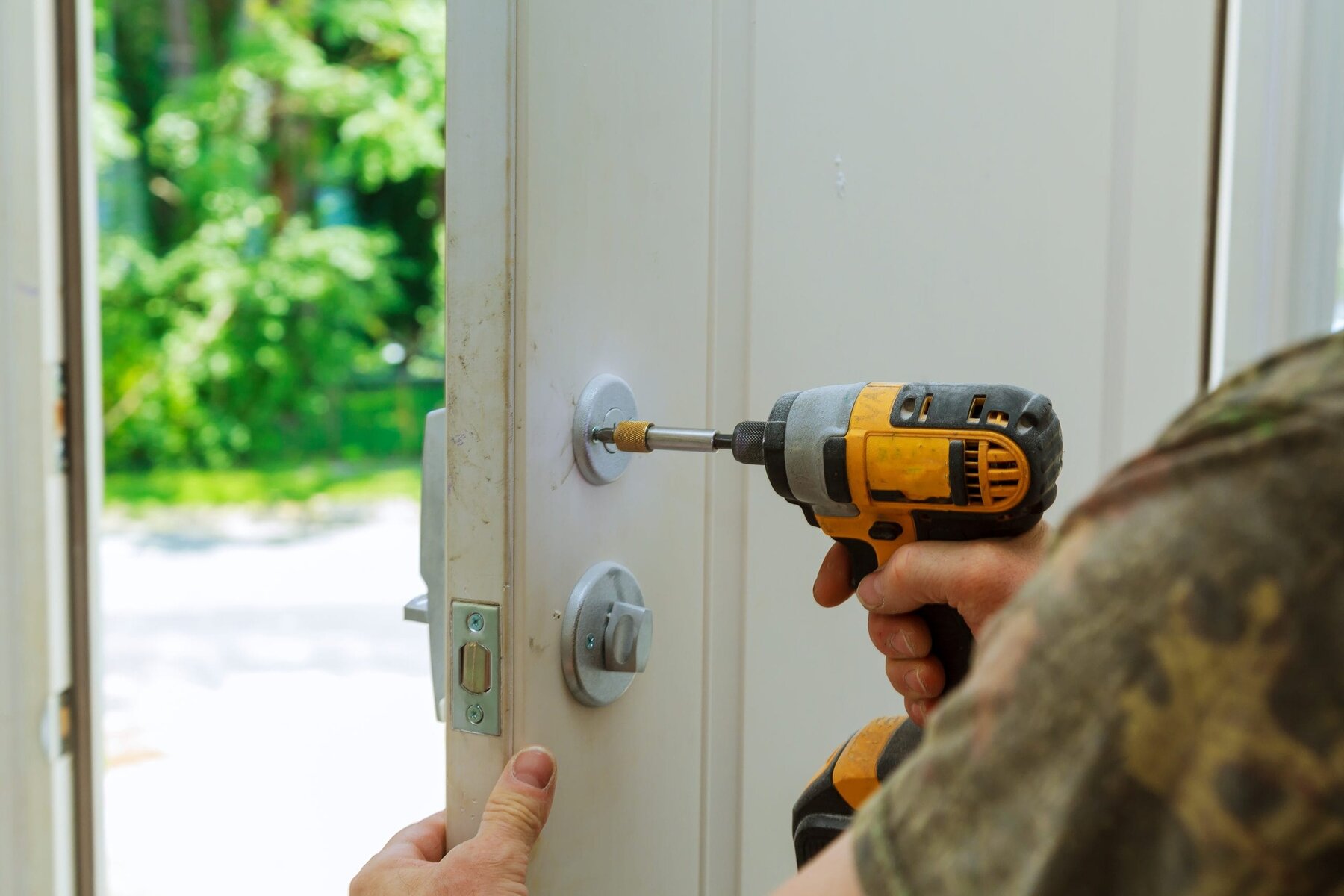
Upgrading locks immediately after an intrusion is critical because compromised door assemblies, duplicated keys, and sheared internal pins eliminate physical resistance and expose Manhattan properties to repeat break-ins. Immediate replacement restores structural integrity, invalidates unaccounted key copies, and upgrades entry points against physical forced entry techniques.
When an unauthorized individual breaches a residence or commercial space in New York City, the security perimeter is permanently compromised. Standard pin-tumbler locks often sustain microscopic shear line damage during lock-picking or bump-key attacks, which renders the locking mechanism unreliable. In cases of violent forced entry, the wood jamb, strike plate, or latch pocket absorbs severe kinetic energy, weakening the door frame even if the lock body appears intact.
We frequently respond to complex security failures across Manhattan where improper post-burglary remediation led to secondary intrusions. In a recent incident at a Tribeca historic loft building, an intruder forced open a standard rim cylinder lock using a heavy pry bar, splitting the soft white pine door casing along the grain line. The building manager initially attempted to resolve the breach by rekeying the damaged cylinder and installing longer screws into the compromised jamb. Three weeks later, a secondary breach occurred because the structural backing behind the strike plate remained entirely fractured.
We resolved this vulnerability by removing the damaged casing, installing a solid steel mounting plate secured directly into the structural brick masonry with sleeve anchors, and upgrading the door assembly to an ANSI Grade 1 heavy-duty mortise lock with a UL 437 drill-resistant high-security cylinder. This comprehensive structural reinforcement created an impenetrable barrier that successfully withstood subsequent impact attempts, protecting both the commercial tenant and building assets.
Structural Vulnerabilities and Common Failure Modes After Forced Entry
Post-burglary lock failures typically stem from hidden fractures within the door frame, bent bolt latches, or compromised cylinder pins that appear functional but fail under minimal pressure. Relying on superficial repairs or rekeying physically damaged locks leaves entry points vulnerable to immediate secondary breaches in high-density urban environments.
In the field, we consistently document critical failure modes that property owners overlook following a security incident:
- Micro-fractured tailpieces: Torsional force applied during an attack weakens the connecting tailpiece between the cylinder and latch bolt, causing sudden failure during routine locking.
- Sheared cylinder mounting screws: Heavy impacts displace the retaining screws, allowing the entire cylinder to rotate freely or slide out of the lock housing.
- Stripped jamb anchor points: Short standard mounting screws pull out of the inner frame, leaving the strike plate supported only by decorative wood trim.
- Distorted latch bolts: Slight bends in the deadbolt throw prevent full extension into the frame, disabling the deadlock mechanism and enabling manual retraction.
- Unauthorized key duplications: Prior access to keys during a soft breach or burglary allows perpetrators to return using physical copies without triggering alarm sensors.
Continuing to operate a door assembly with these hidden mechanical flaws guarantees eventual operational failure and leaves the premises susceptible to bypass techniques. A complete mechanical assessment by our experienced locksmith technicians ensures every hidden point of failure is systematically addressed.
Decision Framework: Lock Rekeying versus High-Security Replacement
Property owners must rekey locks when key control is lost without structural damage, but complete replacement is mandatory whenever force was applied or hardware grades are below commercial specifications. Choosing between rekeying and replacement depends strictly on mechanical integrity, frame condition, and existing cylinder security ratings.
If your entry door has suffered physical impact, prying, or drilling, replace the entire lockset and reinforce the jamb immediately. If key control was lost without physical forced entry and your door features an intact ANSI Grade 1 mortise chassis, perform a targeted cylinder rekey or high-security cylinder retrofit. If your current entrance relies on builder-grade hardware, prioritize upgrading to restricted keyways and hardened steel deadbolts regardless of physical damage.
| Evaluation Metric | Lock Rekeying | Standard Replacement | High-Security Upgrade |
|---|---|---|---|
| Primary Trigger | Lost keys, tenant turnover | Mechanical wear, light damage | Physical breach, forced entry |
| Physical Resistance | Retains existing hardware grade | Standard residential protection | Heavy commercial impact resistance |
| Drill and Pick Defense | Standard pin tumbler limits | Standard internal components | UL 437 hardened steel inserts |
| Key Duplication Control | Unrestricted keyways | Standard keyway profiles | Patented restricted key control |
| Average Hardware Cost | 45 USD to 95 USD per cylinder | 120 USD to 250 USD per lock | 280 USD to 550 USD per system |
| Jamb Reinforcement | Reuses existing strike plate | Standard heavy strike plate | Steel armor front and 3-inch anchors |
Selecting Architectural Locks for Manhattan Residential and Commercial Doors
Manhattan properties require specialized hardware tailored to unique architectural building codes, including heavy-duty mortise locksets, UL 437 drill-resistant cylinders, and ANSI Grade 1 deadbolts. Securing high-density urban entrances requires balancing strict fire emergency egress compliance with advanced mechanical resistance against kicking, prying, and lock bumping.
Data compiled by the FBI Uniform Crime Reporting Program indicates that 55.7 percent of all reported burglaries involve forcible entry, emphasizing the requirement for robust exterior door hardware. Standard builder-grade tubular locks installed on many residential doors fail rapidly when subjected to severe physical force.
The Builders Hardware Manufacturers Association defines ANSI Grade 1 standards as the highest commercial benchmark, requiring locksets to survive over 1,000,000 operational cycles and withstand repeated heavy hammer strikes. For Manhattan apartment doors and commercial shopfronts, we mandate installing Grade 1 hardware paired with reinforced steel strike plates secured by three-inch screws anchored directly into the structural wall framing.
Step-by-Step Security Restoration Protocol
Restoring compromised entry point security requires a systematic technical protocol that thoroughly addresses physical locking hardware, surrounding frame structures, and long-term access management. Executing a structured step-by-step restoration procedure ensures all structural weaknesses are identified, repaired, and permanently hardened against future high-impact intrusion attempts.
- Inspect the structural door frame, casing, and masonry backing for concealed shear cracks or split wood fibers.
- Remove all damaged lock components, handles, and strike plates from the door slab and jamb assembly.
- Mortise or prepare the door cutout to accommodate an upgraded ANSI Grade 1 lock chassis or mortise box.
- Install reinforced strike plates using three-inch hardened steel mounting screws anchor-set into structural wall studs.
- Mount a high-security cylinder featuring UL 437 drill-resistant steel pins and a patented restricted keyway system.
- Test latch throw alignment, key operation, and deadlocking functionality to confirm smooth mechanical clearance.
- Issue registered, non-duplicable keys strictly to authorized individuals and update property security logging records.
Following this rigorous sequential framework ensures that newly installed hardware functions at peak mechanical efficiency while eliminating structural gaps exploited during prior intrusions.
Frequently Asked Questions
Addressing lock replacements after a break-in requires rapid action, clear hardware evaluation, and full knowledge of local building security standards. The following answers address critical concerns regarding emergency locksmith services, structural lock upgrades, key control, and tenant rights across Manhattan residential and commercial properties.
Should I rekey or completely replace locks after a break-in?
You must completely replace your locks after a break-in whenever physical force was applied or when existing hardware falls below commercial security ratings. Physical impacts distort internal cylinders, shear mounting bolts, and weaken latch mechanisms, making rekeying structurally unsafe. Replacing the lockset guarantees complete mechanical integrity and allows you to upgrade to drill and pick-resistant high-security hardware.
How long does an emergency post-break-in lock installation take in Manhattan?
A standard high-security lock replacement or mortise cylinder overhaul typically takes between 45 and 90 minutes to complete on-site. Complex jobs involving structural frame repairs, masonry anchor installation, or custom door fitting may require two to three hours. Our mobile technicians carry full inventory on service vehicles to execute immediate single-visit security restorations.
Can a landlord require me to keep old locks after a burglary?
Under New York City Housing Maintenance Code, landlords are legally obligated to provide safe, functional locking mechanisms on residential apartment entrance doors. Tenants who experience a security breach have the right to demand immediate lock replacement or install approved secondary hardware. If an emergency installation is performed by a tenant, keys must be provided to building management in compliance with lease agreements and fire code regulations.
What makes ANSI Grade 1 locks better for urban property security?
ANSI Grade 1 locks provide superior resistance against forced entry because they are manufactured using solid brass or steel components tested to withstand extreme physical impacts. These commercial-grade locks survive 1,000,000 opening cycles and resist heavy hammer strikes that easily destroy standard Grade 2 or Grade 3 residential locksets. Installing Grade 1 hardware drastically reduces door failure risks in high-density urban environments.
How do restricted keyways prevent future unauthorized entry?
Restricted keyways utilize patented key blanks that cannot be duplicated at retail key kiosks, hardware stores, or unauthorized locksmith shops. Blanks are restricted by keyway manufacturers and distributed exclusively to verified, licensed locksmiths who require written authorization before cutting additional keys. This tight control eliminates undetected key duplication by former occupants, service vendors, or intruders.
Sources
- FBI Uniform Crime Reporting Program – Burglary Offense Data: https://ucr.fbi.gov/crime-in-the-u.s/2019/crime-in-the-u.s.-2019/topic-pages/burglary
- Builders Hardware Manufacturers Association (BHMA) – ANSI/BHMA Hardware Grading Standards: https://buildershardware.com/
People Also Ask
For the highest level of security against break-ins in Manhattan, consider Grade 1 deadbolts with hardened steel inserts and anti-drill plates. Smart locks with built-in alarms and tamper alerts also provide strong deterrence. However, the lock is only as strong as the door frame. A heavy-duty deadbolt is useless if the strike plate is weak. For a comprehensive understanding of this critical component, please refer to our internal article titled The Importance Of A Strong Strike Plate For Your Manhattan Door. ALO Locksmith Services Manhattan NYC recommends combining a high-security deadbolt with a reinforced strike plate and longer screws to ensure the door frame resists forced entry.
Yes, changing the locks when you move into a new home is a critical security step. You never know who might have copies of the existing keys, including previous owners, contractors, or real estate agents. Rekeying or replacing the locks ensures that only you and your family have access. ALO Locksmith Services Manhattan NYC recommends this as a standard practice for any new residence. For comprehensive advice on securing entry points, refer to our internal article titled How To Secure A Glass Storefront Door. This simple upgrade provides immediate peace of mind and is a cost-effective way to protect your property from unauthorized entry.
No, you should not put WD-40 in a lock. While WD-40 is a popular general-purpose lubricant and solvent, it is not designed for locks. It can actually attract dust and debris over time, causing the lock mechanism to become sticky or gummed up. For proper lock maintenance, use a dedicated graphite or Teflon-based lubricant specifically formulated for locks. These dry lubricants reduce friction without leaving a residue. For more detailed advice on keeping your locks in top condition, please refer to our internal article Lock Lubrication & Maintenance in Chelsea, NYC. For professional assistance with lock issues in Manhattan, ALO Locksmith Services Manhattan NYC can provide expert guidance and service.
For standard residential locks, replacing them every five to seven years is a good rule of thumb, but the frequency depends heavily on wear and tear. If you notice keys sticking, the lock feeling loose, or visible rust, it is time for a replacement sooner. High-traffic doors, like your main entrance, may need new hardware every three to five years. However, the most critical reason to change locks is after a security breach, such as a break-in, or when you lose your keys. For a more cost-effective solution after a roommate moves out, consider rekeying instead. As discussed in our internal article Why You Should Rekey After A Roommate Moves Out, this process changes the internal pins so old keys no longer work, which is often a better option than a full replacement. ALO Locksmith Services Manhattan NYC can help you assess your specific hardware.
