
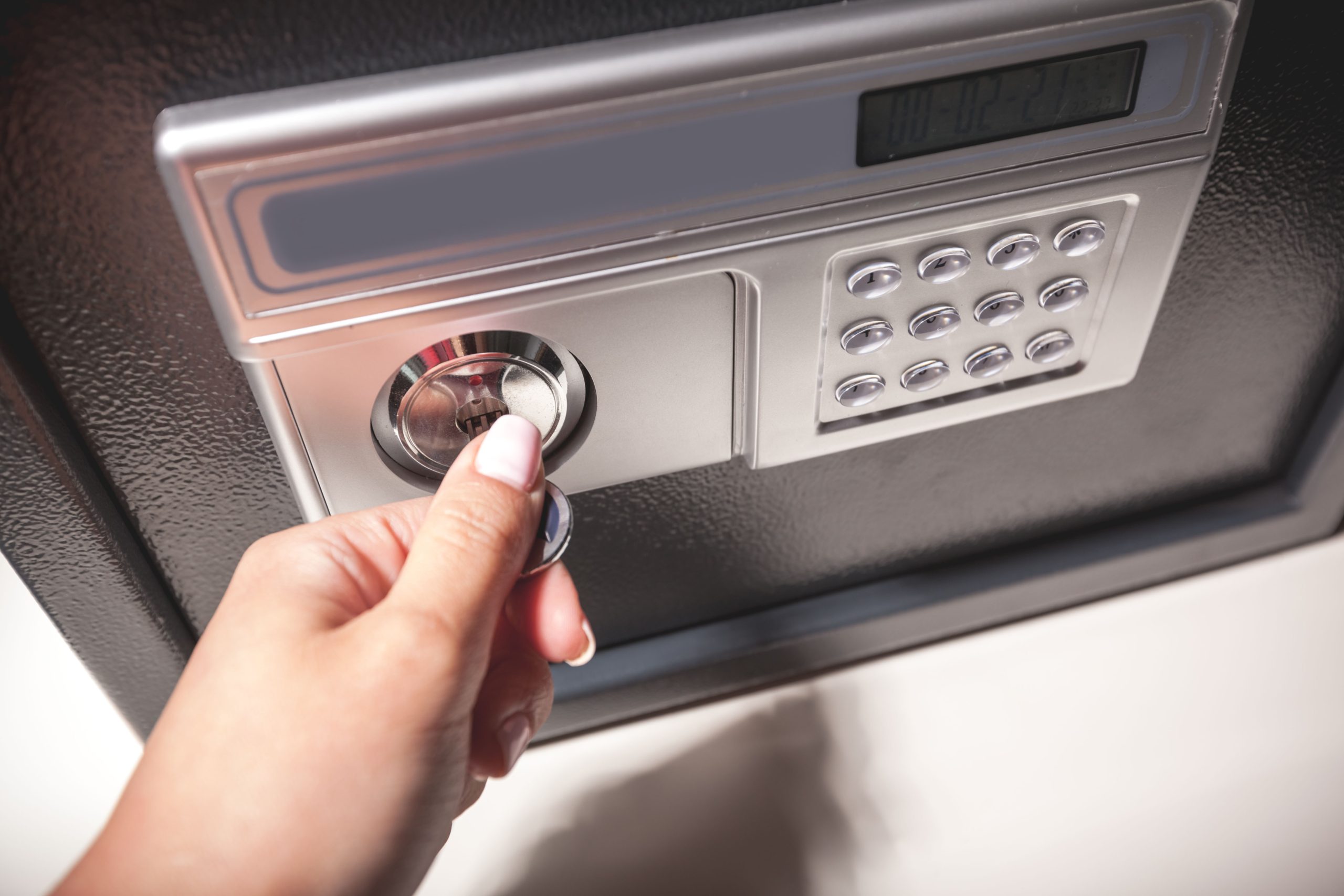
Emergency Safe Entry and Architectural Vulnerabilities
Non-destructive emergency safe entry in Manhattan requires diagnostic physical manipulation or targeted micro-drilling rather than brute-force prying, which damages internal linkages and triggers active re-lockers. By analyzing specific lock cases, hardplates, and electronic components before breaching the container, we preserve both structural integrity and valuable contents.
High-security residential containers and commercial vaults rely on tight mechanical tolerances engineered by established lock manufacturers. Low-end containers consist of thin sheet metal surrounding fire-retardant slurry, whereas UL-rated units incorporate hardened plate steel, ball-bearing matrixes, and secondary re-locking pins. Forced entry attempts with pry bars, grinders, or chemicals deform internal linkage bars and fire active re-lockers, locking down the door mechanism permanently.
Key internal defense components evaluated during our field diagnostics include:
- Lock Case Construction: Mechanical wheel packs rely on tumblers driven by a drive cam where each wheel must align its fence gate precisely to drop the fence lever.
- Hardplate Matrixes: Manganese steel plates or cemented carbide inserts dull standard drill bits and prevent direct drill penetration into the lock case.
- Auxiliary Re-Lockers: Spring-loaded secondary steel pins fire into frame notches whenever thermal heat, physical punching, or high-pressure drilling impacts the door plate.
- Electronic Logic Boards: Microprocessor boards control digital keypads, where entry failure usually stems from voltage drops or wiring pinch points rather than bolt failure.
Strategic Entry Protocols: Manipulation Versus Precision Micro-Drilling
Choosing between non-destructive manipulation and surgical micro-drilling depends on lock model specifications, mechanical wear, and internal tumbler alignment. Manipulation preserves original factory security standards by interpreting microscopic drive cam variances, whereas micro-drilling through a quarter-inch opening combined with borescope optics resolves frozen tumblers, damaged springs, or electronic failures.
Non-destructive manipulation remains our primary tactical objective during any residential lockout across Manhattan properties. By carefully manipulating the mechanical dial, our technicians isolate subtle variations in contact points along the drive cam to decipher the exact wheel combination. This precise approach allows us to open the unit without compromising its original protective structure or voiding existing security certifications.
When severe mechanical degradation or internal rust prevents dial manipulation, precision micro-drilling provides a secondary, highly controlled alternative. Instead of causing structural destruction, we insert an optical fiber borescope through a quarter-inch hole drilled at precise factory coordinate points. This optical access grants direct visual verification of the internal drop lever and wheel gates.
Once the internal drop lever disengages and the safe door opens, our team taps the drilled hole, drives a hardened steel pin inside, seals it with fire-rated compound, and refinishes the faceplate. This specialized repair process ensures the container maintains its full security rating and thermal defensive capabilities.
Real-World Case Studies: Technical Field Resolutions in Manhattan
Resolving high-security lockouts across Manhattan requires specialized diagnostic mapping, custom bypass tools, and structural schematics tailored to local architectural constraints. In prewar residential buildings and commercial properties, historical hardware and environmental factors demand specialized bypass protocols whenever active re-lockers engage or legacy brass tumblers suffer severe surface corrosion.
Upper East Side Tempered Glass Re-Locker Engagement
Bypassing triggered glass re-lockers requires precise structural mapping to disengage secondary spring-loaded pins without destroying the door frame. An uncertified operator previously attempted drilling into an Upper East Side residential safe, shattering an internal glass plate and firing four spring-loaded pins. We utilized blueprint schematics from the Safe and Vault Technicians Association to map relief coordinates accurately.
Our team drilled two micro-access channels to reach each spring-loaded pin mechanism individually. Using customized bypass wires, we relieved mechanical tension from every pin, retracted the main boltwork, and preserved the internal assets intact. We then retrofitted the re-locker assembly and certified the container for continued operation.
Central Park West Prewar Antique Corrosion
Opening antique floor safes with heavily oxidized lock components demands visual alignment via high-resolution optical video equipment rather than raw force. In a prewar apartment on Central Park West, decades of high ambient humidity had severely rusted a 1930s floor safe brass wheel pack. This oxidation caused the tumblers to drag, rendering mechanical dial manipulation ineffective during standard entry attempts.
We inserted a 2.0 mm video borescope through a single micro-entry hole positioned directly above the drop lever pivot. Using a precision indexing tool, our technicians cleared each rusted wheel gate individually and successfully opened the door. The procedure produced zero structural deformation to the historical floor housing.
Following the opening, we retrofitted the container with a modern UL-certified mechanical lock assembly following industry guidelines published by the ALOA Security Professionals Association. Key tactical lessons from our complex field resolutions include:
- Avoid drilling into unfamiliar door structures without verifying factory pin coordinates.
- Formulate a full re-locker bypass plan before penetrating glass-backed safe matrixes.
- Index corroded wheel packs using video borescopes to protect delicate internal contents.
Methodologies, Timelines, and Financial Decision Matrix
Evaluating safe entry options involves balancing service fees, structural impact, and recovery time across different lock configurations. Non-destructive manipulation offers complete structural preservation at moderate cost, while hardplate drilling requires higher financial investment and specialized restoration, allowing Manhattan property owners to make informed choices based on urgency and container ratings.
Urban field logistics in Manhattan introduce distinct operational constraints that directly affect service timelines and equipment transport. Co-op building regulations strictly limit high-decibel drilling activities to specific weekday hours, requiring tight schedule management. Accessing upper floors in narrow historic structures also requires careful equipment selection to protect antique flooring and interior finishes.
Furthermore, moving heavy safes exceeding 500 pounds across prewar flooring requires specialized stair-climbing gear to comply with structural load limitations. Unconditioned basement spaces also accelerate humidity damage inside lock cases, accelerating mechanical failure rates across residential units. The matrix below outlines key operational variables observed during our field service engagements in Manhattan.
| Entry Method | Structural Impact | Typical Service Time | Primary Target Mechanism | Estimated Cost Range |
|---|---|---|---|---|
| Dial Lock Manipulation | Zero impact; safe retains full certification | 45 to 150 minutes | Standard 3-wheel mechanical combination locks | 250 USD to 450 USD |
| Keyway Decoding and Bypass | Zero to minimal surface impact | 30 to 60 minutes | Dual-control key locks and tubular overrides | 200 USD to 400 USD |
| Borescope Micro-Drilling | Single 0.25-inch hole; repaired with hardpin plug | 90 to 180 minutes | Electronic lockouts and seized mechanical wheel packs | 350 USD to 650 USD |
| Hardplate Drilling and Patching | Small entry hole; fully restored with hardened plug | 120 to 240 minutes | High-security safes with hardplate or active re-lockers | 450 USD to 850 USD |
| Forced Structural Entry | Complete structural destruction of safe body | 60 to 120 minutes | Depreciated low-security containers or severe fires | 600 USD to 1200 USD |
Regulatory Standards and Defense Mechanism Logic
Understanding burglary security classifications established by UL Solutions clarifies why specialized tooling is mandatory for authorized safe entry. Independent laboratory standards measure a container’s capacity to withstand targeted physical attacks using carbide drills, pressure devices, and cutting tools, establishing precise operational expectations during field entries.
Standard burglary resistance ratings define specific defense expectations across common residential and commercial containers:
- UL Residential Security Container (RSC): Certified to withstand 5 minutes of direct prying, drilling, punching, and chiseling attacks using standard hand tools.
- UL Standard 687 TL-15 Rating: Designed to resist skilled attacks with carbide drills, power tools, and pressure devices for 15 minutes of net working time.
- UL Standard 687 TL-30 Rating: Engineered to withstand aggressive 30-minute attacks from expert technicians using advanced abrasive wheels and heavy drills.
High-security units frequently integrate thermal re-locking devices designed to release secondary spring-loaded bolts if high temperatures are detected. Attempting brute-force entries against thermal or mechanical re-lockers without factory schematics inevitably locks down the entire boltwork mechanism. If you possess a basic residential security container, prioritize non-destructive manipulation; if you require access to a TL-30 rated container with thermal re-lockers, schedule precision micro-drilling using verified factory schematics.
Preventive Maintenance Protocols and Operational Decision Framework
Preventing emergency safe lockouts requires disciplined operational practices and routine technical maintenance schedules. Most residential service calls in Manhattan stem from predictable user errors, including improper code storage or applying oil-based lubricants inside keyways, which can be mitigated through annual battery cycles and periodic certified inspections.
Common operational mistakes observed during our field service calls include:
- Storing Access Combinations Inside: Locking combination sheets or factory override credentials inside the safe pocket prevents non-destructive code recovery.
- Utilizing Off-Brand Batteries: Low-quality power cells fail to deliver sufficient amperage to retract internal solenoids, even when keypads light up.
- Applying Oil-Based Lubricants: Liquid sprays attract environmental dust, creating a sticky residue that seizes internal tumbler springs over time.
- Spinning Combination Dials Aggressively: Fast or jerky dial operation wears down brass drive pins, gradually shifting lock alignment points out of tolerance.
To ensure continuous security and smooth mechanical performance, follow these sequential maintenance steps:
- Replace electronic keypad batteries annually with high-quality name-brand alkaline cells.
- Schedule a professional mechanical inspection every four years to clean and re-lubricate internal linkage bars with synthetic grease.
- Monitor ambient room humidity to prevent moisture accumulation and internal lock oxidation.
Frequently Asked Questions
How do professional technicians open a locked mechanical safe without knowing the combination?
Technicians open locked mechanical safes using non-destructive dial manipulation or visual micro-drilling based on lock case mechanics. Manipulation involves feeling microscopic variations in drive cam contact points as the dial turns to reveal combination numbers. When internal rust or component wear prevents manipulation, technicians reference factory schematics to drill a quarter-inch hole and view wheel gates via an optical borescope. This allows manual alignment of the lock tumblers without causing permanent structural damage to the safe body.
Can an electronic safe be opened if the keypad fails or the battery dies?
Yes, an electronic safe can be opened through external power bridging, signal decoding, or targeted solenoid bypass. If replacing the power cell with a high-amperage alkaline battery fails, technicians inspect the wiring harness for electrical shorts. Faulty electronic keypads can be bridged with specialized diagnostic equipment to retract the locking latch directly. If an internal motor or solenoid suffers mechanical seizure, micro-drilling at the solenoid release coordinate permits manual bolt retraction.
What happens if an internal re-locker is triggered during a safe entry attempt?
When an internal re-locker triggers, secondary spring-loaded steel pins shoot into frame notches to lock the door independently of the main combination dial. Neutralizing a triggered re-locker requires identifying pin locations using structural blueprints and drilling targeted relief channels. Technicians then insert specialized tension wires to manually retract each secondary pin before operating the door handle. This complex procedure preserves internal contents while allowing full repair and restoration of the safe’s protective housing.
How much does professional residential safe access cost in Manhattan?
Standard non-destructive safe entry in Manhattan generally ranges from 200 USD to 450 USD for basic mechanical or digital locks. Complex high-security containers requiring hardplate drilling, optical borescopes, or re-locker mitigation cost between 450 USD and 850 USD. Overall service investment depends on the container’s UL burglary rating, mechanical complexity, and specific building access constraints within Manhattan properties.
Will drilling a safe permanently ruin its fire rating or structural security?
No, professional drilling performed by certified technicians does not ruin a safe’s fire rating or structural integrity when proper restoration procedures are applied. After opening the container, technicians press a hardened tungsten-carbide steel pin into the entry hole to thwart future drill attacks at that location. The channel is then sealed with fire-resistant compound and refinished smooth against the exterior surface. This standardized repair fully restores both the burglary resistance and thermal protective capabilities of the safe.
Sources
- Underwriters Laboratories (UL Solutions) – Standard for Burglary-Resistant Safes (UL 687): https://www.ul.com
- Safe and Vault Technicians Association (SAVTA) – Technical Standards and Certifications: https://www.savta.org
- ALOA Security Professionals Association – Professional Safe and Vault Security Guidelines: https://www.aloa.org
