
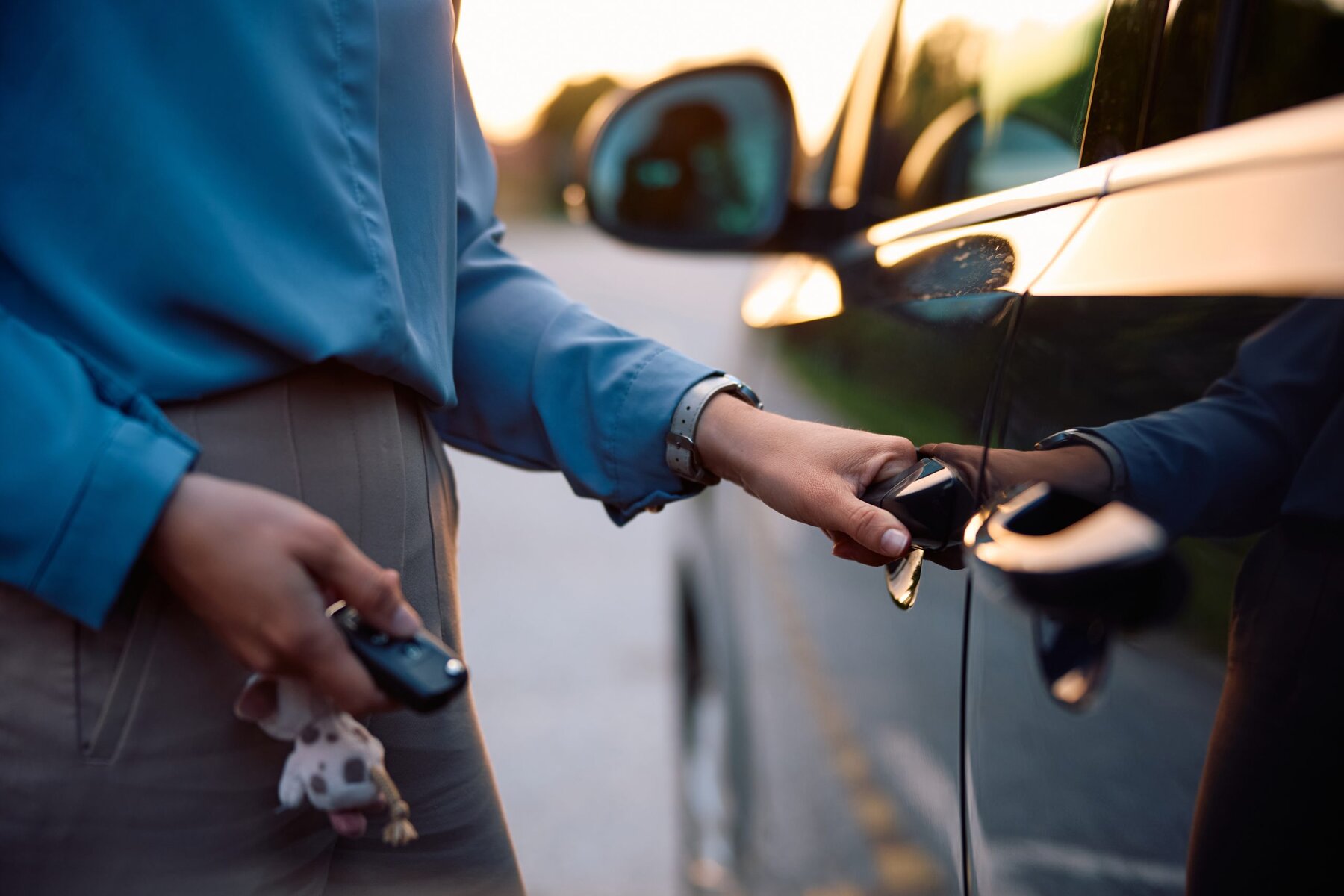
Honda Key Fob Replacement in the Upper West Side: What Actually Works and What Costs You Money
When a Honda key fob fails on the Upper West Side of Manhattan, immediate field diagnostics save vehicle owners hundreds of dollars and unnecessary towing delays. Replacing a depleted 3-volt CR2032 coin battery costs between 3 dollars and 5 dollars, resolving approximately 70 percent of functional remote failures on-site within one minute.
When battery replacement fails to restore functionality, vehicle owners face a direct choice between local automotive dealerships and mobile locksmith specialists. Assuming that the dealership is the only path to a functional replacement is an expensive misconception for Manhattan drivers. We bring specialized mobile labs directly to your curb or garage, bypassing expensive municipal towing fees and lengthy dealership delays. We replace, cut, and program Honda keys on-location anywhere between Columbus Circle and 110th Street at a fraction of dealer pricing.
Primary Causes of Honda Key Fob Failure in Manhattan
Honda key fob failure in Manhattan stems primarily from battery exhaustion, signal interference, and structural circuit damage caused by severe pavement impacts. Environmental factors unique to Upper West Side pre-war architecture and underground parking structures accelerate radio frequency degradation, while daily urban drops fracture delicate internal solder joints inside keyless entry housing.
Through years of hands-on automotive lock service across pre-war walk-ups on West End Avenue and high-rises along Riverside Drive, we have cataloged the primary failure points affecting Honda keyless entry remotes:
- Battery Depletion: Standard 3-volt CR2032 or CR1620 coin cell batteries typically expire within 2 to 4 years of active use. As voltage drops below 2.7 volts, transmission range degrades before the fob stops communicating entirely.
- Corroded Circuit Board Contacts: Moisture intrusion from rainy NYC commutes and snow slush causes immediate corrosion on internal brass contact pads, disrupting power transmission.
- Fractured Printed Circuit Board Solder Joints: Persistent physical impacts from drops onto Manhattan concrete sidewalks crack micro-solder joints. This issue regularly occurs on 2013 to 2018 Honda Accord and Civic remote boards after 5 or more years of daily handling.
- Desynchronized Transponder Signals: Rapidly pressing remote buttons out of range of the vehicle causes rolling code desynchronization between the fob chip and the vehicle engine control unit.
- Defective Vehicle Immobilizer Receiver Modules: In certain cases, the fob remains operational, but internal vehicle antenna modules or blown fuses fail to process incoming radio frequency signals.
Testing a spare key fob immediately isolates the issue. If our client’s spare remote unlocks and starts the vehicle smoothly, the issue is isolated to the primary fob. If neither fob functions, the vehicle immobilizer unit or car battery requires immediate diagnostic scanning.
Dealership Service Versus Mobile Locksmiths
Mobile locksmiths outperform traditional dealerships in Upper West Side key replacement scenarios by delivering immediate on-site laser cutting, module programming, and zero towing expenses. While dealerships mandate off-site appointments and costly vehicle transport, certified mobile units generate fully functional original or high-tier aftermarket Honda smart keys directly at your parked location.
Upper West Side residents frequently contact franchised dealerships when key issues arise, assuming factory service is mandatory. Dealerships routinely charge between 300 dollars and 500 dollars for a single replacement smart key, plus mandatory tow fees ranging from 150 dollars to 250 dollars for non-running vehicles. We travel directly to parked vehicles along Broadway, inside subterranean garages, or on residential side streets, completely eliminating towing logistics.
| Service Provider | Typical Total Cost | Turnaround Time | Location Requirements | Hardware Options |
|---|---|---|---|---|
| Honda Dealership | 300 to 500 dollars | 2 to 5 business days | Vehicle must be towed to dealer | OEM only |
| Mobile Locksmith | 150 to 250 dollars | 30 to 60 minutes | On-site service at vehicle location | OEM and High-Tier Aftermarket |
| Online DIY Retailer | 40 to 100 dollars | 3 to 7 shipping days | Self-assembly and external programming required | Aftermarket only |
High-tier aftermarket key fobs provide reliable performance for over 90 percent of drivers, retaining full keyless entry and push-button start functionality for 3 to 5 years under daily use. For drivers who prefer factory original parts, we also source and program authentic OEM Honda key fobs on site.
Honda Key Fob Hardware Specifications and Replacement Pricing
Honda key replacement pricing depends directly on vehicle generation, transponder chip encryption, and key blade cutting requirements across different model years. Modern push-to-start smart keys require sophisticated cryptographic pairing tools, whereas older physical key blades utilize basic transponder chips that carry significantly lower total replacement costs across Upper West Side service calls.
Selecting the incorrect part number based on model year alone leads to programming failure. Vehicle owners can review official security guidelines provided by the National Highway Traffic Safety Administration regarding theft prevention and vehicle immobilizers. We maintain a full inventory of high-grade automotive chips and blanks to accommodate all Honda production years.
| Honda Model and Year Range | Key Fob Configuration | Transponder/Frequency | Estimated Total Locksmith Cost |
|---|---|---|---|
| 2000 to 2009 Honda Civic / Accord / CR-V | Separate Key Head Transponder + Remote Fob | Megamos Crypto 48 / 313.8 MHz | 80 to 140 dollars |
| 2010 to 2015 Honda Accord / Civic LX | Integrated Remote Key Blade (3-4 Button) | NXP PCF7936 HiTag 2 / 313.8 MHz | 120 to 180 dollars |
| 2016 to 2021 Honda Civic / CR-V / Pilot | Smart Key Proximity Fob (Push-to-Start) | Hitag AES 4A Chip / 433.92 MHz | 180 to 280 dollars |
| 2022 to Present Honda Accord / Civic / Prologue | Next-Gen Proximity Smart Key | Encrypted HiTag AES / 433.92 MHz Dual-Band | 220 to 350 dollars |
The Mechanics of Honda Key Fob Programming
Programming a replacement Honda key fob requires executing a secure digital handshake between the internal transponder chip and the vehicle immobilizer receiver module. Modern proximity systems demand specialized OBD-II diagnostic tablets to bypass anti-theft security algorithms, whereas early two-thousand models permit basic manual ignition sequence steps for keyless remote functions.
Consumer options depend heavily on vehicle age and system hardware:
- 2000 to 2009 Honda Models: Older systems support manual onboard programming procedures for remote keyless entry features using specific ignition cycles. However, the physical transponder chip that enables engine start still requires OBD-II key learning tools.
- 2010 to 2015 Honda Models: Require dedicated automotive diagnostic tablets connected directly to the vehicle OBD-II port to write new key identification codes into the immobilizer memory.
- 2016 to Present Honda Smart Key Systems: Advanced push-to-start proximity systems require high-level key programming systems capable of executing security bypass algorithms and EEPROM data reads.
Incomplete or failed DIY programming attempts using unverified consumer diagnostic adapters frequently trigger the vehicle immobilizer lockout system. Once locked out, the vehicle ECU refuses all ignition signals, requiring a complete system reset via professional locksmith equipment. Vehicle owners can review comprehensive vehicle evaluation guides on Edmunds Automotive Guides when assessing service options.
Upper West Side Environmental Signal Interference
Radio frequency interference on the Upper West Side stems from pre-war architectural masonry, high-density wireless networks, and subterranean concrete structures. Dense building materials absorb 313.8 MHz and 433.92 MHz key fob signals, causing reduced operational range or localized transmission blackouts near major avenues like Broadway and Columbus Circle.
High-density residential structures built prior to 1940 feature dense plaster and lath construction reinforced with thick structural masonry. These heavy materials attenuate radio frequency signals transmitted by key fobs. Furthermore, heavy concentrations of high-frequency commercial Wi-Fi networks and localized cellular transceivers near major hubs like Lincoln Square introduce electromagnetic noise. Vehicle owners who park in multi-level underground concrete garages along West 68th Street or Riverside Drive frequently report severe signal dead zones.
When a fob operates only when held directly against the driver door handle, atmospheric or structural signal dampening is usually responsible rather than total hardware failure. We systematically measure localized RF interference during diagnostics to distinguish between weak transmitter output and environmental signal blocking.
Real-World Case Studies from Upper West Side Field Operations
Field operations across the Upper West Side require specialized mobile equipment capable of resolving complex lockouts, subterranean extraction challenges, and ECU security resets. The following case studies illustrate exact diagnostic methods and resolution protocols our technicians applied during actual emergency service calls in high-density Manhattan environments.
Case Study 1: Complete Key Loss in a Subterranean Parking Structure
Extracting a vehicle stranded on subterranean level B3 requires specialized portable key generation tools due to zero cellular reception and tight six-foot overhead clearances. Flatbed tow trucks cannot physically enter these low-clearance Manhattan parking garages, making on-site lock decoding and OBD-II key programming the only viable technical solution.
A 2019 Honda Civic EX owner lost their primary smart key while walking near Riverside Park. The vehicle was stranded in an underground parking garage on West 68th Street. We executed the following resolution sequence on-site:
- We reached the vehicle on foot carrying portable battery power and specialized key generation gear.
- We decoded the mechanical door lock cylinder tumblers within 8 minutes using a Lishi HON66 pick and decoder tool.
- We cut a temporary emergency insert blade using a battery-powered mobile key cutting machine.
- Connecting an OBD-II key programmer directly to the vehicle diagnostic connector, we cleared all lost keys from the vehicle security register to prevent theft and programmed two new 433.92 MHz proximity smart keys.
Total resolution time was 35 minutes, eliminating hundreds of dollars in specialized flatbed extraction fees.
Case Study 2: Immobilizer Lockout from Failed DIY Key Attempt
Attempting DIY key programming with uncertified OBD-II smartphone adapters often corrupts the vehicle immobilizer key registry, triggering immediate anti-theft lockout status. Professional ECU re-initialization purges invalid encryption data, rewrites factory security parameters, and pairs certified smart key hardware to restore vehicle operation directly on municipal streets.
An Upper West Side owner purchased an unbranded 30 dollar key fob online for a 2017 Honda CR-V and attempted to program it using an open-source smartphone app. The corrupted sequence left the car stranded on West 74th Street during morning street cleaning hours. We executed the following recovery protocol:
- Diagnostic evaluation confirmed an Active Anti-Theft Lockout status with complete ignition signal denial.
- We executed a full immobilizer system re-initialization, purging the corrupted key registry from memory.
- We wrote factory-compliant security protocol parameters back into the engine control module.
- We paired a high-tier certified smart key fob, restoring vehicle operation in time to avoid municipal parking fines.
Cost-Effective Alternatives to Full Fob Replacement
Replacing internal key fob components or outer shells provides a low-cost repair alternative when circuit boards remain fully operational. Shell refurbishment, emergency mechanical blade replacement, and battery terminal cleaning resolve physical defects at a fraction of full smart key replacement pricing across Upper West Side repair scenarios.
When internal circuit boards remain fully functional, lower-cost repairs resolve surface defects:
- Remote Shell Replacement: If plastic key housings crack or rubber button pads disintegrate, internal circuit boards can be transferred into a new shell for 20 to 40 dollars.
- Emergency Mechanical Blade Cutting: If the physical emergency insert key breaks or bends, a new blade can be laser-cut from the original key code for 30 to 50 dollars without replacing electronic components.
- Terminal Cleaning and Refurbishing: Oxide build-up on battery contacts can be micro-cleansed using electronic contact cleaner, restoring power flow for 15 to 30 dollars.
Frequently Asked Questions
Navigating Honda key fob replacement on the Upper West Side involves understanding pricing structures, self-programming limitations, and environmental interference factors. Below are concise answers to the five most common questions vehicle owners ask when experiencing key fob failures or total key loss across Upper West Side neighborhoods.
How much does Honda key fob replacement cost on the Upper West Side?
Replacing a Honda key fob on the Upper West Side typically costs between 150 dollars and 350 dollars depending on model year and security features. Basic remote head keys for older vehicles cost 80 to 150 dollars, while modern proximity smart keys with push-to-start functions range from 200 to 350 dollars including on-site cutting and programming labor.
Can I program a Honda key fob myself without going to a dealer?
Self-programming without professional equipment is limited exclusively to non-transponder keyless entry functions on select Honda models built prior to 2010. Honda vehicles manufactured from 2010 onward require specialized OBD-II diagnostic equipment to program transponder chips and register proximity keys directly with the vehicle immobilizer engine module.
What should I do if my Honda key fob stops working suddenly?
If your Honda key fob stops working suddenly, replace the internal 3-volt CR2032 battery immediately and test your vehicle using a secondary spare key. If both keys fail to unlock or start the vehicle, contact a mobile automotive locksmith to perform OBD-II immobilizer system diagnostics and restore cryptographic connection.
Why do pre-war buildings on the Upper West Side affect key fob signals?
Pre-war buildings on the Upper West Side attenuate key fob signals because their thick plaster, structural concrete, and masonry walls absorb radio frequencies transmitted at 313.8 MHz and 433.92 MHz. High ambient wireless signal density near major avenues further interferes with key fob range, requiring physical proximity to driver door handles.
How do mobile locksmiths replace a Honda key fob when all keys are lost?
Mobile locksmiths replace lost Honda keys by decoding physical door lock cylinders with specialized pick tools, laser cutting a new mechanical key blade, and programming transponder chips directly via the OBD-II port. This entire process occurs on-site within 30 to 60 minutes, bypassing the need for dealership towing completely.
Sources
- National Highway Traffic Safety Administration (NHTSA): https://www.nhtsa.gov
- Edmunds Automotive Guides: https://www.edmunds.com
