
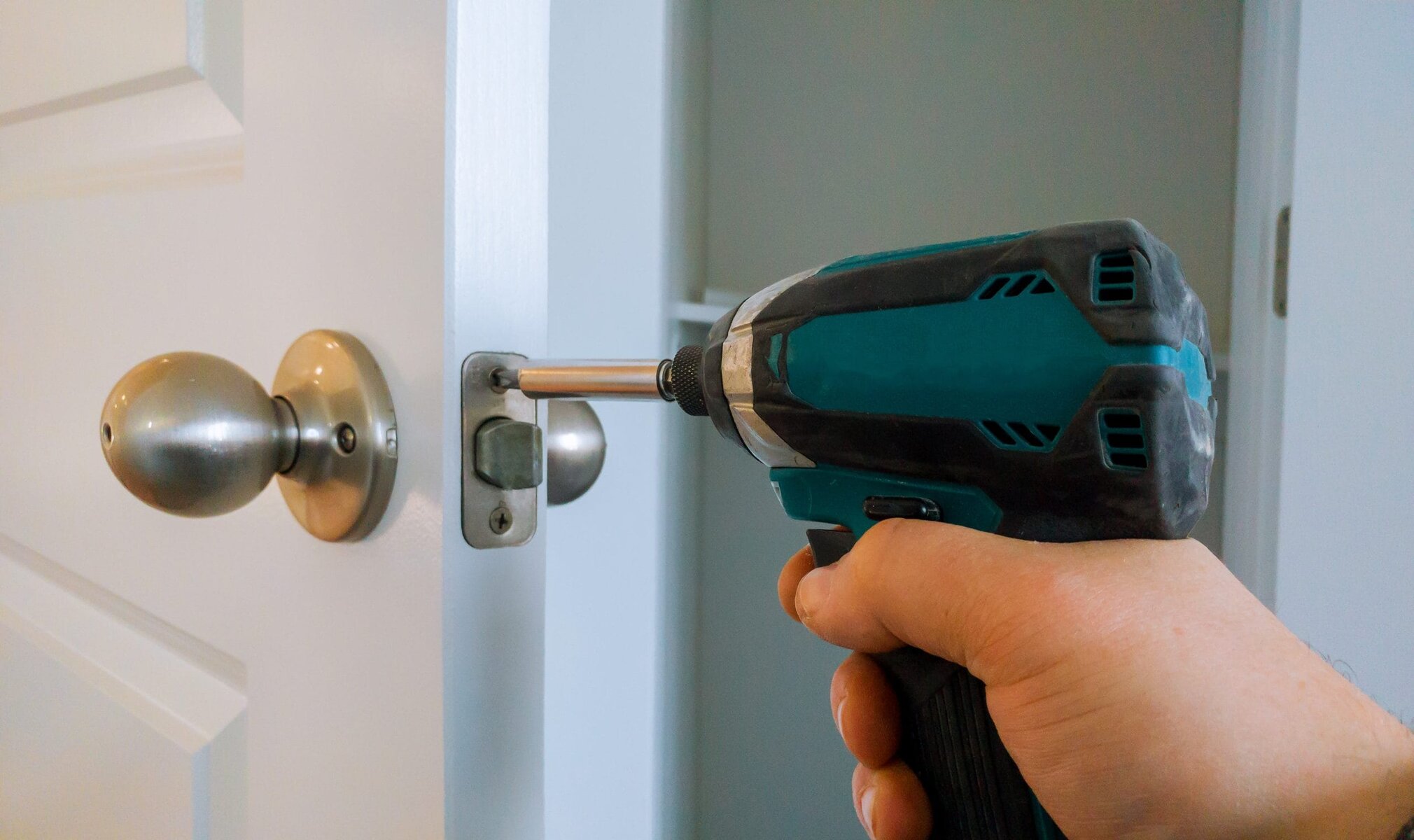
Ever had one of those days where you’re juggling groceries, your phone, and your dignity, only to hear the definitive thunk of your car door locking you out? Or maybe you’ve just moved into a new NYC apartment and the sheer number of previous tenants has you side-eyeing that old lock like it’s seen too much. We get it. We’ve been there, both as fellow city-dwellers and as the people you call to fix these wonderfully inconvenient moments. Let’s talk locks and security, not in a boring, textbook way, but like we’re figuring it out over a coffee.
Table of Contents
Your Front Door: More Than Just a Place for Pizza Delivery
Think about it. That front door is the main character in your home’s security story. It’s the barrier between your cozy couch and, well, everything else. So, why do so many of us rely on hardware that’s basically a polite suggestion to stay out?
The Humble (and Often Useless) Spring Latch
You know the standard lock that comes with most doorknobs? The one with the angled bolt that snaps shut? That’s a spring latch. It’s convenient, sure, but a stiff credit card or a bit of forceful jiggling can sometimes convince it to retire early. We don’t hate it, but we definitely don’t trust it as your only line of defense.
The Mighty Deadbolt: Your Security BFF
This is where we become best friends with the deadbolt. Unlike its spring-loaded cousin, a deadbolt has a solid, rectangular bolt that you manually throw with a key or thumbturn. No springs, no easy tricks. It physically extends into the door frame, making it a formidable obstacle. For any residential door in Manhattan, a quality deadbolt isn’t a luxury; it’s a necessity. IMO, it’s the single most effective upgrade you can make for peace of mind.
Taking it Up a Notch: High Security Locks
Now, if you really want to sleep soundly, we talk about high security locks. These aren’t your average hardware store finds. They feature things like:
- Restricted keyways that prevent unauthorized duplication (you need proof of ownership to get a copy).
- Hardened steel components that resist drilling, picking, and snapping.
- Complex internal mechanisms that laugh in the face of bump keys.
We install these for clients who have valuable collections, home offices, or just an admirable level of “nope” towards potential intruders. The cost is higher, but the value is in the unshakable security.
When Tech Meets Your Threshold: The Smart Lock Lowdown
Smart locks feel like the future, don’t they? Letting in the dog walker from your phone, never carrying a key again—it’s pretty slick. But are they right for you? Let’s break it down from our on-the-ground experience.
The Pros (They’re Cool, We Admit)
Convenience is king. Lockouts become almost obsolete because your phone is your key. You can grant temporary access to guests or service people. Some even integrate with other smart home devices. For offices or shops, managing employee access digitally can be a game-changer.
The Cons (The Reality Check)
They’re electronics on your door, which means they need power (batteries, which will die at the most dramatic moment possible). They can have connectivity issues. And frankly, some cheaper models have cyber-security holes you could drive a truck through. Our advice? If you go smart, invest in a reputable brand and pair it with a traditional, physical deadbolt for backup. We’ve done many lock installations where we add a smart lock above a robust deadbolt—best of both worlds.
The Business of Staying Secure: Commercial Needs
Securing a business is a whole different ballgame. The stakes feel higher, and the needs are more complex. Whether it’s a chic restaurant in SoHo, a bustling office in Midtown, or a boutique shop in the Village, your security system is part of your brand’s integrity.
It’s Not One-Size-Fits-All
A restaurant needs to secure liquor storage, back entrances, and maybe a fancy wine cellar. An office needs master key systems for managers and individual access for employees. And let’s not forget the gate to the delivery area or rooftop—a often-overlooked vulnerability. We approach every commercial job at ALO Locksmith with this mindset: what are you protecting, who needs access, and what’s the flow of your daily operation? Our experts don’t just sell locks; we design access systems.
A Quick Guide to Commercial Security Layers
| Area | Common Threats | Our Go-To Solutions |
|---|---|---|
| Front Entrance | Unauthorized entry, forced entry | High security locks, Grade 1 Commercial Deadbolts, Access Control Systems |
| Back Door/Gate | Unattended break-ins, employee theft | Heavy-duty gate locks, alarms, high security locks with audit trails |
| Internal Offices | Confidentiality breaches, internal theft | Keyed alike or master-keyed systems, lock replacement for former employees |
| Storage/Stock | Inventory shrinkage, vandalism | Deadbolts, reinforced strike plates, door sensors |
“Help, I’m on the Street!”: The Dreaded Lockout & Other Emergencies
This is the moment that defines a locksmith’s relationship with a client. Panic. Frustration. Maybe a little embarrassment. We’ve seen it all, and trust us, there’s no judgment here. Whether it’s a residential lockout, a commercial door that won’t budge at opening time, or the classic car locksmith scenario in a rainy parking garage, speed and compassion are key.
Why Your “Nearest” Locksmith Might Not Be Your Best Bet
A quick search for “locksmith near me” or “nearest locksmith” can be a minefield. You’ll see ads from national call centers that dispatch unknown subcontractors, often with hidden fees and “surprise” price hikes once they’re on-site. The closest phone number isn’t always the closest trustworthy service.
This is where being a local Manhattan company matters. When you call ALO Locksmith, you get our team, directly. We’re nearby, we know the boroughs, and our price is the price we quote. No bait-and-switch. We’re fast because we’re already here in the city, not coming from another borough after taking your call from a call center in another state. For emergency situations, that local presence makes all the difference.
Your Car: A Rolling Fortress (Until You Lose the Key)
Ah, the modern automobile. It’s a computer on wheels, and its security has evolved from a simple metal key. This is car locksmith territory, and it’s gotten technical.
The Key Evolution: From Metal to Laser-Cut & Beyond
- Traditional Keys: Still around, but fading. Simple duplication.
- Laser-Cut Keys: Thicker, with intricate cuts. Require specialized machines to duplicate.
- Smart Keys & FOB Keys: The real MVPs of modern car locksmith work. These are encoded electronic devices that communicate with your car’s immobilizer system. No chip, no start. Losing one is a pricey headache.
What We Actually Do When You’re Locked Out
Gone are the days of the coat hanger (thankfully, for your car’s window seals). Modern vehicles often require non-invasive tools that can manipulate the lock mechanism through the window seal or, more commonly, we use specialized programmers to create a new FOB key or smart key on the spot. It’s a blend of locksmithing skill and mobile automotive electronics. So, if you’re in a pinch, yelling at your car in a Manhattan parking lot, know that a solution exists that doesn’t involve a smashed window 🙂
Your Top Lock & Key Questions, Answered
1. “I just bought a new house/apartment. Should I re-key or replace all the locks?”
Great question, and one we hear daily. Re-keying means we change the internal pins of the existing locks so the old keys no longer work. It’s fast, cost-effective, and perfect if the existing hardware is in good shape. Lock replacement means installing brand-new hardware. We recommend this if the locks are old, damaged, or low-quality. For total peace of mind in a new-to-you space, we usually suggest at least re-keying everything immediately. FYI, we can often do this in one visit.
2. “How do I avoid getting scammed by an emergency locksmith?”
Red flags are vague quotes like “$50 service,” demands for payment before starting, unmarked vehicles, and refusal to show ID or a license. Always ask for the business name, address, and a firm, upfront price for the service before they begin work. A reputable local company like ours will give you a clear quote and has a physical presence you can verify.
3. “What’s the one security upgrade I should absolutely do?”
No contest: install a Grade 1, single-cylinder deadbolt on every exterior door if you don’t have one. It’s the workhorse of home security. For businesses, it’s re-keying and changing codes anytime an employee with access leaves. It seems simple, but so many offices and shops overlook it.
So, there you have it. Security in this city doesn’t have to be a confusing or scary topic. It’s about smart upgrades, understanding the tech, and knowing who to call when things go sideways—which they will, because that’s NYC life. Whether you’re looking to fortify your residential fortress, streamline access for your commercial space, or need a fast and friendly expert to get you back into your car or home, remember that your local Manhattan team at ALO Locksmith is here. We’re your 24/7 solution, because let’s be honest, locks never seem to fail between 9 and 5. Give us a call next time you need a hand—or a key.
Related Articles
People Also Ask
A standard deadbolt consists of several key components. The cylinder is the lock body where the key is inserted, and it contains the pins and springs that secure the lock. The thumb turn is the interior knob used to lock or unlock the door without a key. The bolt (or latch) is the metal bar that extends from the lock into the door frame to secure the door. The strike plate is the metal piece mounted on the door frame that receives the bolt. Finally, the mounting screws and faceplate secure the lock to the door. For a deeper understanding of securing older doors, we recommend reading our internal article How to Reinforce the Mortise Locks in Your NYC Pre-War Apartment Without Ruining Its Character – A Security Roadmap, which provides a comprehensive security roadmap for pre-war apartments.
A security door lock consists of several critical components that work together to provide protection. The main parts include the deadbolt, which is a solid metal bolt that extends into the door frame, and the cylinder, which houses the key mechanism. The strike plate is a metal plate mounted on the door frame that receives the deadbolt; its strength is vital for resisting forced entry. Other key parts are the latch (for the handle), the escutcheon (the decorative plate around the cylinder), and the screws, which should be at least three inches long for security. For a deeper understanding of how these elements integrate, we recommend reading our internal article titled The Importance Of Strike Plates In Door Security. ALO Locksmith Services Manhattan NYC always emphasizes checking the strike plate reinforcement as a first step in upgrading any lock.
The primary components of a bolt lock, such as a deadbolt, include the cylinder, which is the keyed assembly that turns to activate the lock. The bolt itself is the metal bar that extends from the lock body into the door frame. The strike plate is the metal piece mounted on the door jamb that receives the bolt. A key component is the latch or deadbolt mechanism, which is the internal gear that moves the bolt. The cylinder housing, often called the lock body, contains these internal parts. For a comprehensive guide on securing older locks, ALO Locksmith Services Manhattan NYC recommends our internal article How to Reinforce the Mortise Locks in Your NYC Pre-War Apartment Without Ruining Its Character – A Security Roadmap for specific advice on pre-war hardware. Understanding these parts is crucial for proper maintenance and security.
Common issues with bolt locks often stem from misalignment, where the bolt does not fully extend into the strike plate due to a shifted door frame or loose hinges. Another frequent problem is a stuck or frozen bolt caused by dirt, rust, or lack of lubrication, which prevents smooth operation. Worn-out internal components, such as springs or gears, can also lead to the bolt failing to retract or lock properly. For comprehensive guidance on addressing these issues in a commercial setting, our internal article titled Understanding Master Key Systems For Multi-Tenant Office Buildings provides detailed solutions. For professional service in Manhattan, ALO Locksmith Services Manhattan NYC recommends regular maintenance checks to ensure bolt locks remain aligned and lubricated for optimal security.
The internal design of a high security deadbolt key is far more complex than a standard key. It typically features a patented keyway with restricted key blanks, meaning only authorized locksmiths can duplicate them. The key itself often has a deep milled groove or a set of angled cuts that interact with secondary locking mechanisms inside the cylinder, such as sidebars or ball bearings. These elements prevent picking, bumping, and impressioning. For a commercial setting, this level of security is crucial. For more details on access control for busy environments, you can read our internal article titled The Pros And Cons Of Keypad Locks For A High-Traffic Office. ALO Locksmith Services Manhattan NYC recommends these keys for any property requiring high-grade physical security.
