
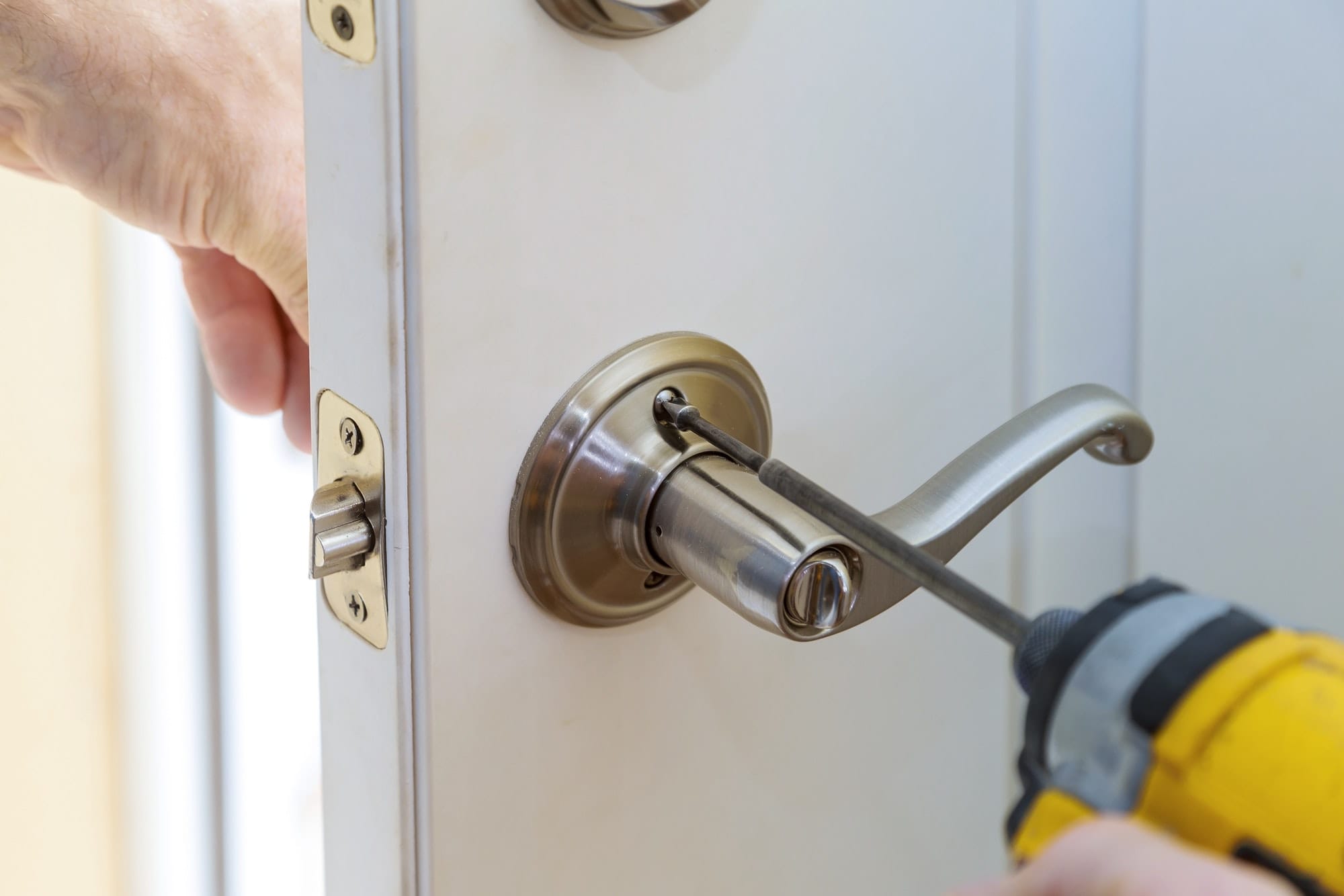
We’ve lost count of how many times we’ve walked into a Manhattan office or retail space and watched someone struggle with a door handle that just doesn’t work for them. Maybe it’s a round knob that’s impossible to grip with arthritis. Maybe it’s a push bar that requires more force than a child or an older person can reasonably apply. These aren’t design flaws in the usual sense—they’re compliance failures. And in New York City, that’s a problem with real teeth.
The Americans with Disabilities Act (ADA) has been around since 1990, but we still see businesses getting hit with fines, lawsuits, or—worse—locking out a chunk of their customer base because the door hardware wasn’t thought through. For Manhattan business owners, ADA compliance isn’t just a legal box to check. It’s about whether your front door actually opens for everyone who needs to get through it.
Key Takeaways
- ADA door hardware standards focus on operable parts that don’t require tight grasping, pinching, or twisting.
- Common violations in NYC include round knobs, excessive opening force, and improper mounting heights.
- Lever handles, push bars, and touchless systems are the most practical solutions for commercial spaces.
- Retrofitting existing hardware is often cheaper than full door replacement, but requires careful measurement.
- Local building codes in Manhattan may layer additional requirements on top of federal ADA rules.
Table of Contents
What ADA Actually Requires for Door Hardware
The ADA Standards for Accessible Design are specific about what counts as compliant hardware. The rule of thumb is this: if someone has limited hand strength, uses a prosthetic, or can’t twist their wrist, they should still be able to operate the door. That means no round knobs that require a tight grip and rotation. No pinch-style handles that demand precise thumb-and-forefinger coordination.
Instead, the standard calls for operable parts that can be used with a closed fist or a loose grip. Lever handles, push plates, and touch-activated mechanisms all fit the bill. The hardware also has to be mounted between 34 inches and 48 inches above the finished floor. That height range matters more than most people realize—mount something too high and someone in a wheelchair can’t reach it; too low and it becomes awkward for standing users.
There’s also a force requirement. Interior doors shouldn’t require more than 5 pounds of force to open. Exterior doors, depending on local code, can go up to 8.5 pounds, but that’s a maximum. We’ve tested doors in older Manhattan buildings where the closer was cranked so tight it took 15 pounds of pull just to get the latch to release. That’s a lawsuit waiting to happen.
The Real Cost of Non-Compliance in NYC
Let’s talk about what happens when you ignore this. The Department of Justice doesn’t mess around. We’ve seen fines in the range of $55,000 to $75,000 for a first violation in a commercial space. That’s before legal fees and any settlement costs if a customer files a private lawsuit, which they can do under the ADA. And in Manhattan, where foot traffic is dense and every square foot of retail space is premium, a bad reputation spreads fast.
But the cost isn’t just financial. We worked with a small restaurant in the East Village last year. The owner had installed beautiful vintage brass knobs on the bathroom doors—looked great, totally authentic to the space. Problem was, a customer with limited hand strength couldn’t open the door to use the restroom. That customer left a one-star review that mentioned the accessibility issue. The restaurant lost about two weeks of revenue while they scrambled to get compliant hardware installed and the review addressed. All because of a $15 door knob.
That’s the kind of real-world consequence that keeps us busy. And it’s why we always tell business owners: don’t wait for a complaint to fix your hardware.
Common Mistakes We See in Manhattan Commercial Spaces
Round Knobs Are Still Everywhere
You’d think by 2025 everyone would have swapped these out, but we still see them in older office buildings, especially in Midtown. The logic we hear is always the same: “They’re original to the building, and we’re trying to preserve the aesthetic.” Fair enough, but the ADA doesn’t have an aesthetic exemption. If you want to keep the historic look, you can install a lever handle that matches the period style. There are plenty of options that don’t look like hospital hardware.
Push Bars Installed at the Wrong Height
This one is surprisingly common. A push bar needs to have its actuating portion between 34 and 48 inches off the floor. But we’ve measured bars in SoHo lofts that were mounted at 50 inches because the installer guessed. That extra two inches puts you out of compliance. The fix is usually just moving the bar down, but if the door was prepped for a specific height, you might need a new backplate or a different model.
Closers That Slam or Drag
Door closers are a necessary evil in commercial spaces. They keep fire doors shut and prevent drafts. But if the closer is adjusted too aggressively, the door becomes hard to open. We’ve seen closers that require so much force that a person in a wheelchair literally cannot get through without help. The ADA force requirements apply to the entire opening cycle, not just the initial pull. A good closer should let the door open smoothly and close gently. Most modern closers have adjustable spring tension and sweep speed. If yours doesn’t, it’s time to upgrade.
Choosing the Right Hardware for Your Manhattan Business
Not all compliant hardware is created equal. The best choice depends on your door type, traffic volume, and the specific needs of your customers. Here’s a breakdown of what we typically recommend.
Lever Handles
These are the standard for most commercial applications. They’re easy to operate, come in a wide range of styles, and are relatively inexpensive to retrofit. Look for handles with a return curve at the end—this prevents the handle from catching on clothing or bags. We install a lot of Grade 1 lever sets in Manhattan because they hold up to heavy daily use.
Push/Pull Hardware
For doors that are always pushed open from one side, a simple push plate on the push side and a pull handle on the pull side works well. This is common in retail storefronts and office lobbies. The key is making sure the pull handle is shaped so a hand can curl around it without pinching. Avoid narrow “c” shapes that require a tight grip.
Touchless and Automatic Doors
These are becoming more popular, especially post-pandemic. A wave sensor or motion detector can open the door automatically, which is the most accessible option possible. The trade-off is cost—automatic operators can run $2,000 to $5,000 per door, plus installation and maintenance. But for high-traffic entrances, it’s often worth it.
Panic Hardware
For exit doors that require fire-rated hardware, you need panic bars that meet both ADA and fire code. The bar should activate with a downward or forward push, and the force to release the latch should be minimal. We see a lot of old rim-type panic devices in Manhattan that are stiff and hard to press. Modern touch-bar designs are much better.
A Practical Comparison of ADA-Compliant Options
To help you decide, here’s a straightforward table based on what we’ve seen work in real Manhattan buildings.
| Hardware Type | Best For | Common Pitfall | Estimated Cost (Installed) |
|---|---|---|---|
| Lever Handle | Single doors, office entrances | Handle gets loose over time with heavy use | $150–$400 per door |
| Push/Pull Plate | Retail storefronts, restrooms | Pull handle too narrow for full hand grip | $100–$250 per door |
| Touchless Operator | High-traffic lobbies, healthcare | Requires power source and regular sensor cleaning | $2,000–$5,000 per door |
| Panic Bar (Touch Bar) | Fire exits, rear doors | Bar mounted too high or too low | $300–$800 per door |
| Automatic Sliding Door | Wide entrances, hospitals | Expensive repair if track gets debris | $4,000–$8,000 per door |
The cost estimates assume standard installation in a typical Manhattan commercial space. If you’re dealing with historic doors, reinforced frames, or unusual masonry, expect to add 20–30% for labor.
When DIY Makes Sense—And When It Doesn’t
We get calls from business owners who want to swap out a door knob themselves. For a simple lever handle on a standard wooden door, that’s usually a fine weekend project. You measure the backset, buy a compatible handle, and swap it out in twenty minutes. If you’re comfortable with a screwdriver, go for it.
But here’s where it gets tricky. Many Manhattan buildings have metal frames, fire-rated doors, or electrified hardware. If you’re dealing with any of those, DIY is a bad idea. A fire-rated door has specific requirements about the holes you can drill and the hardware you can install. Drill the wrong size hole or remove the wrong screws, and you can void the fire rating. That’s a liability issue if there’s ever a fire.
Also, if your door has an electric strike, magnetic lock, or access control system, the wiring is usually more complex than it looks. We’ve fixed a lot of “simple” DIY jobs where someone shorted a circuit board or wired the strike backwards. The fix ends up costing more than if they’d hired us from the start.
Our rule of thumb: if the door has any wiring, any fire rating label, or any unusual frame material, call a professional. It’s not worth the risk.
Navigating NYC Building Codes on Top of ADA
Manhattan business owners have to deal with both federal ADA standards and the New York City Building Code. The city code sometimes goes further than the ADA. For example, NYC requires that all accessible entrances have a power-assisted or automatic door opener if the door is over a certain weight. The ADA doesn’t mandate that—it just says the door must be operable. But NYC says you need the assist.
We’ve also seen conflicts between the fire department’s requirements for panic hardware and the ADA’s requirements for easy operation. In practice, modern panic bars solve both problems. But if you’re working with older hardware, you might find that the only way to meet both codes is to replace the entire door assembly.
If you’re planning a renovation or a new build, we strongly recommend working with an architect or a consultant who specializes in accessibility. They’ll catch issues before construction starts. Retrofitting after the fact is always more expensive.
The Maintenance Side Most People Forget
Compliant hardware stops being compliant the moment it breaks. A lever handle that sags and doesn’t return to horizontal is a tripping hazard and an accessibility failure. A push bar that sticks in the engaged position can trap someone inside. We do a lot of service calls in Manhattan where the hardware was fine when it was installed, but after a year of heavy use, it’s worn out.
The solution is regular maintenance. Have a locksmith or a door hardware technician inspect your doors every six months. They should check:
- Lever handle tension and return
- Closer adjustment and sweep speed
- Push bar activation force
- Latch alignment
- Weatherstripping that might be adding drag
This isn’t expensive. A basic inspection runs $100–$200, and it can save you from a lawsuit or a costly emergency repair.
When Your Situation Doesn’t Fit the Standard Advice
There are cases where standard ADA hardware just doesn’t work well. For example, if you run a gym or a warehouse where doors take constant abuse, a standard lever handle might get bent or broken within months. In those situations, we’ve used heavy-duty push/pull hardware with reinforced plates. It’s not as elegant, but it survives.
Another edge case is historic preservation. If your building is landmarked, the Landmarks Preservation Commission may have rules about what hardware you can install. You can’t just drill new holes or change the visible hardware without approval. In those cases, you might need custom replicas of period hardware that are modified to meet ADA requirements. It’s expensive, but it’s the only way to stay compliant and keep the landmark designation.
We’ve helped a few businesses in the Flatiron District navigate this. It usually involves working with a specialty manufacturer that can produce historically accurate levers with modern internals. Plan for a lead time of 8–12 weeks.
Final Thoughts on Getting It Right
ADA compliance for door hardware isn’t complicated in theory. Pick hardware that doesn’t require tight grasping, mount it at the right height, and make sure the door doesn’t take a Herculean effort to open. But in practice, the details matter. A half-inch measurement error, a mismatched closer, or a worn-out latch can turn a compliant door into a barrier.
If you’re in Manhattan and you’re not sure whether your doors meet the standards, walk through your own entrance. Try opening every door with a closed fist. If you can’t do it, your customers can’t either. That’s the simplest test there is.
For business owners who want to get this done right without the headache, ALO Locksmith has been handling ADA retrofits across Manhattan for years. We know the local codes, we’ve worked in landmarked buildings, and we’ve seen every kind of door hardware failure. If you’d rather not learn about ADA compliance through a lawsuit, give us a call. We’ll come take a look, give you an honest assessment, and get your doors working for everyone who needs to use them.
