
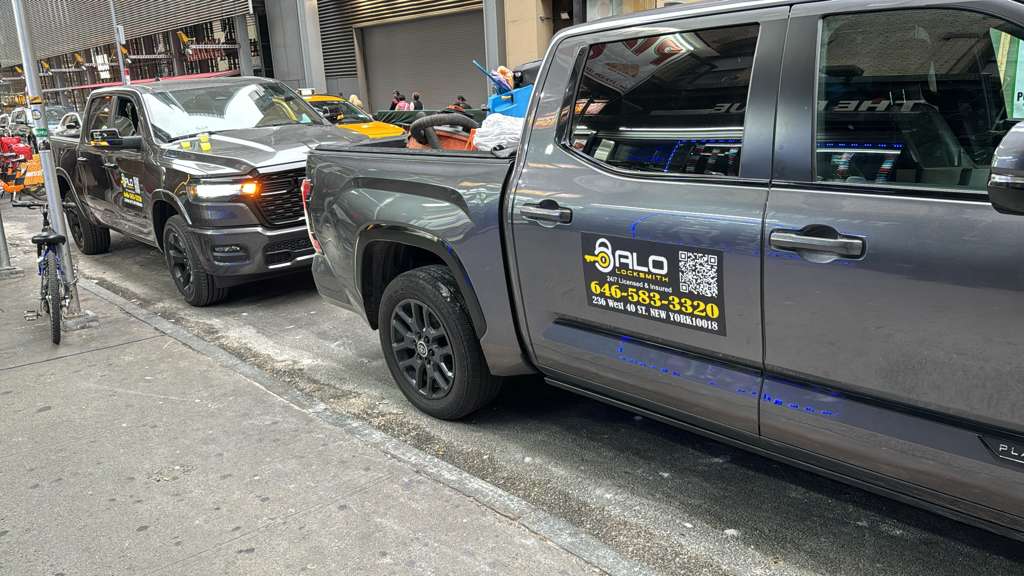
Commercial Security Maintenance Contracts in Manhattan
Commercial security maintenance contracts in Manhattan provide structured preventative care, rapid guaranteed emergency dispatch, and routine regulatory compliance audits for commercial door hardware. These contractual agreements protect property owners from emergency rate surcharges, mitigate operational downtime from mechanical failure, and ensure high-traffic entrances continuously meet stringent municipal life-safety and accessibility standards.
In dense commercial corridors across Midtown and Lower Manhattan, heavy daily foot traffic subjects commercial door assemblies to continuous mechanical wear. Standard off-the-shelf locking mechanisms degrade quickly under thousands of daily door cycles, causing latch failures, misaligned strike plates, and keyway jamming. Our commercial service level agreements establish scheduled lubrication, bolt realignment, and lock cylinder maintenance to correct minor wear before hardware breaks completely.
Contractual service agreements protect commercial building budgets from unpredictable emergency callout expenses. Unscheduled emergency service calls during peak business hours or overnight shifts can cost anywhere from 250 US dollars to over 600 US dollars per callout in New York City. By establishing a fixed retainer or pre-negotiated discounted service rates, building owners stabilize facilities expenditure while receiving top-tier dispatch priority.
Commercial security retainers provide several vital operational safeguards:
- Priority technician dispatch with guaranteed emergency response times.
- Scheduled physical hardware maintenance to prevent lockouts and mechanical breakdowns.
- Regular key control audits to document issued keys and maintain keyway authorization.
- Continuous code compliance reviews to help prevent municipal safety fines.
Essential Commercial Locksmith Services and Master Key Systems
Essential commercial locksmith services integrate high-security hardware, master key system architecture, rekeying, electronic access control, and panic exit hardware repairs across enterprise environments. These specialized offerings restrict unauthorized key duplication, streamline complex building management workflows, establish clear organizational access hierarchies, and maintain physical security perimeters for high-density office towers, retail storefronts, and multi-tenant facilities.
Designing a customized master key system replaces disorganized key rings with an engineered access hierarchy. Executive keys open all door cylinders across an entire property, department heads access assigned office suites or floors, and staff members open only their individual workspace doors. We protect key integrity using restricted, patented keyways that key-cutting machines cannot duplicate without explicit written authorization from property management.
Commercial door assemblies demand heavy-duty hardware built to withstand intense physical abuse. We install locks certified under hardware standards established by the Builders Hardware Manufacturers Association (BHMA). Grade 1 mortise locksets undergo rigorous testing to survive at least 1,000,000 operational cycles, making them the industry standard for main building entrances and high-traffic interior doors.
Implementing a secure commercial master key architecture follows a strict four-step process:
- Perform a comprehensive door-by-door hardware audit across all facility entry points.
- Design a customized keying schedule detailing master, grand master, and user key access levels.
- Cut restricted key blanks using factory-authorized key cutting equipment under keyway registration contracts.
- Replace existing lock cylinders with ANSI Grade 1 high-security cylinders and verify key operation across all tiers.
NYC Life Safety and Fire Code Compliance
NYC life safety and fire code compliance requires commercial lock assemblies to grant immediate, single-motion egress without keys or special knowledge. Commercial locksmith agreements incorporate scheduled compliance audits, ensuring panic hardware, fire door latching mechanisms, and electrified access hardware operate under maximum force thresholds while protecting facility managers from steep municipal penalties and operational shutdown orders.
Commercial facilities in Manhattan must strictly follow fire safety rules established by the International Code Council (ICC) and local regulations. Under NYC Building Code BC Section 1010.1.10.3, panic and fire exit hardware must operate with an unlatching force of no more than 15 pounds of force. Additionally, the push bar must extend across at least half the width of the door leaf to guarantee immediate opening during emergency evacuations.
According to safety guidelines published by the National Fire Protection Association (NFPA) under NFPA 80, fire-rated door assemblies must undergo complete physical inspection annually. Installing unapproved secondary locks, such as padlocks or surface deadbolts on required egress doors, is a serious violation. Municipal fire inspectors can issue fines ranging from 800 US dollars to 5,000 US dollars per violation and force temporary facility closures until hardware is brought into compliance.
Failure to maintain life-safety compliance creates significant operational and legal risks:
- Immediate municipal fines from the FDNY or NYC Department of Buildings.
- Potential invalidation of property insurance coverage in the event of a emergency egress incident.
- Increased liability claims resulting from restricted emergency evacuation routes.
- Operational disruptions due to forced building re-inspections or stop-work orders.
Comparative Analysis: On-Demand Service vs Service Level Agreements
Choosing between on-demand locksmith services and a structured service level agreement determines whether a Manhattan commercial property operates reactively or proactively. Service contracts deliver predictable monthly maintenance costs, guaranteed priority dispatch windows, systematic key tracking, and mandatory regulatory hardware audits, whereas on-demand repairs expose facility budgets to volatile labor markups and heightened vulnerability risks.
| Operational Performance Metric | On-Demand Locksmith Repairs | Commercial Service Level Agreement (SLA) |
|---|---|---|
| Emergency Response Time | Variable (Typically 2 to 4 hours) | Guaranteed Priority Dispatch (30 to 60 minutes) |
| Callout and Labor Pricing | Standard hourly fees plus surge surcharges | Discounted fixed rates or transparent monthly retainer |
| Regulatory Code Inspections | Reactive; performed after code violations occur | Proactive annual or bi-annual physical hardware audits |
| Key Control Management | Unregistered keys with duplicate duplication risk | Restricted keyway registry with formal key authorization |
| Hardware Longevity | Replacement executed after complete mechanical breakdown | Preventative lubrication, alignment, and component updates |
If your commercial facility experiences low foot traffic and minimal key distribution, on-demand service may cover occasional repairs. However, if you manage multi-tenant office buildings, high-volume retail locations, or secure corporate headquarters in Manhattan, a commercial service level agreement provides essential financial predictability and code compliance verification.
Real-World Field Resolution: High-Security Master Keying and Access Control Integration
Resolving complex real-world commercial security failures requires a methodical field diagnostic process that balances physical key management, life safety compliance, and electronic access integration. By replacing unapproved secondary locking hardware, engineering restricted master key hierarchies, and retrofitting fail-secure electrified locking devices tied to building fire alarms, commercial locksmiths eliminate dangerous code violations and structural vulnerabilities.
Our team was called to address a severe security compliance failure at a twelve-story commercial office building in SoHo. The building was issued an official FDNY code violation because tenants had installed secondary deadbolts on stairwell fire doors. Additionally, ground floor electric strikes frequently failed to latch, leaving the main perimeter entry unsecured, while lost keys across 40 tenant suites created serious security concerns.
We executed a comprehensive four-step remedy to resolve all building hardware and compliance failures:
- Removed all unapproved secondary deadbolts from stairwell egress doors to restore unobstructed single-motion emergency egress.
- Installed UL-listed ANSI Grade 1 panic push bars conforming to NYC BC Section 1010.1.10.3 with an unlatching force under 15 pounds.
- Re-keyed all suite door locks to a restricted, drill-resistant master key setup, revoking unrecorded key copies and establishing master key control.
- Installed fail-secure electrified mortise locks on perimeter entrances linked to the building access control panel and fire alarm override circuit.
Following these installations, the facility passed its subsequent FDNY and NYC Department of Buildings re-inspections with zero code violations. The building owner gained full administrative key control while providing tenants with secure card-access door entry.
Frequently Asked Questions
What are the primary benefits of a commercial locksmith contract for Manhattan businesses?
Commercial locksmith contracts provide priority dispatch times, predictable maintenance expenses, and routine regulatory hardware audits. These service agreements eliminate high emergency surge charges during after-hours service calls. Furthermore, structured contracts preserve building key control through official key tracking registries.
How often must commercial door hardware be inspected for NYC code compliance?
Commercial fire door assemblies and egress door hardware must undergo formal testing at least once per year under NFPA 80 standards. High-traffic commercial properties in Manhattan often schedule bi-annual hardware checks to inspect closing speeds, panic hardware releasing force, and alignment. Scheduled audits prevent unexpected municipal violations and ensure public safety.
What is the mechanical difference between ANSI Grade 1 and Grade 2 commercial locks?
ANSI Grade 1 locksets represent the highest standard of physical security, tested to endure at least 1,000,000 operational cycles and severe impact. Grade 2 locksets are rated for medium-duty commercial use and tested to 400,000 cycles. Exterior doors and high-traffic office entrances in Manhattan require Grade 1 hardware for long-term reliability.
Can electronic access control hardware integrate with mechanical master key systems?
Electronic access control systems can easily integrate alongside traditional mechanical master key systems. Keypads, proximity card readers, and smart locks are paired with mechanical high-security cylinders featuring physical master key overrides. This hybrid approach gives administrators digital access tracking while maintaining physical mechanical key entry for first responders.
How do service contracts manage after-hours commercial emergency lockouts?
Service agreements provide guaranteed 24/7 priority emergency dispatch with clear flat-rate billing. On-call commercial locksmiths arrive with specialized tools to service, pick, or rekey high-security cylinders without damaging commercial door frames. Technicians verify client authorization credentials before unlocking any commercial door to maintain property security.
Sources
- Builders Hardware Manufacturers Association (BHMA): https://buildershardware.com/
- International Code Council (ICC): https://www.iccsafe.org/
- National Fire Protection Association (NFPA): https://www.nfpa.org/
- NYC Building Code Chapter 10 (Means of Egress & Lock Hardware Regulations)
People Also Ask
The income for self-employed locksmiths in Manhattan varies based on experience, specialization, and client volume. On average, a self-employed locksmith can earn between $40,000 and $80,000 annually, though top professionals with strong reputations can exceed $100,000. Factors like emergency call-out fees, commercial contracts, and residential work influence earnings. It is important to note that self-employed locksmiths must cover their own tools, insurance, and marketing costs, which can reduce net income. For reliable service and transparent pricing, many clients turn to ALO Locksmith Services Manhattan NYC, where skilled technicians provide expert solutions. Always verify credentials and request a written estimate before any work begins to ensure fair compensation and quality results.
Three responsible practices that locksmiths should always follow include verifying identification before performing any work, providing a transparent written estimate, and adhering to local licensing regulations. First, a professional should always ask for proof of residency or ownership to prevent unauthorized access. Second, they must offer a clear, itemized quote for labor and parts before starting, avoiding hidden fees. Third, compliance with New York City Department of Consumer Affairs licensing requirements is non-negotiable to ensure legal operation and consumer protection. For more guidance on avoiding unethical operators, refer to our internal article How to Spot a Locksmith Scam in New York City: Definitive Guide to Avoid Fraud, Overcharges, and Unlicensed “Phantom” Locksmiths. At ALO Locksmith Services Manhattan NYC, we uphold these standards to guarantee trust and safety for every client.
Valuing a locksmith business requires a thorough analysis of its assets, revenue streams, and market position. A common approach is the multiple of earnings method, where you multiply the net profit by a factor typically between 2 and 5, depending on stability and growth potential. You should also assess tangible assets like vehicles, tools, and inventory, as well as intangible assets such as client contracts and brand reputation. For a business operating in a competitive market like Manhattan, recurring service contracts and a strong online presence significantly increase value. For more detailed guidance, you can refer to our internal article titled Locksmith Services. A professional appraisal is always recommended to ensure an accurate valuation based on current industry standards.
The average annual income for a locksmith in the United States typically ranges from $40,000 to $60,000, though this can vary based on experience, certifications, and location. In a high-demand market like Manhattan, skilled professionals often earn above the national average due to the cost of living and the complexity of urban security systems. Entry-level technicians may start lower, while master locksmiths with specialized skills in high-security locks or electronic access systems can command higher wages. For precise, up-to-date figures in your area, consulting a local provider like ALO Locksmith Services Manhattan NYC can offer insight into current industry rates and earning potential.
