
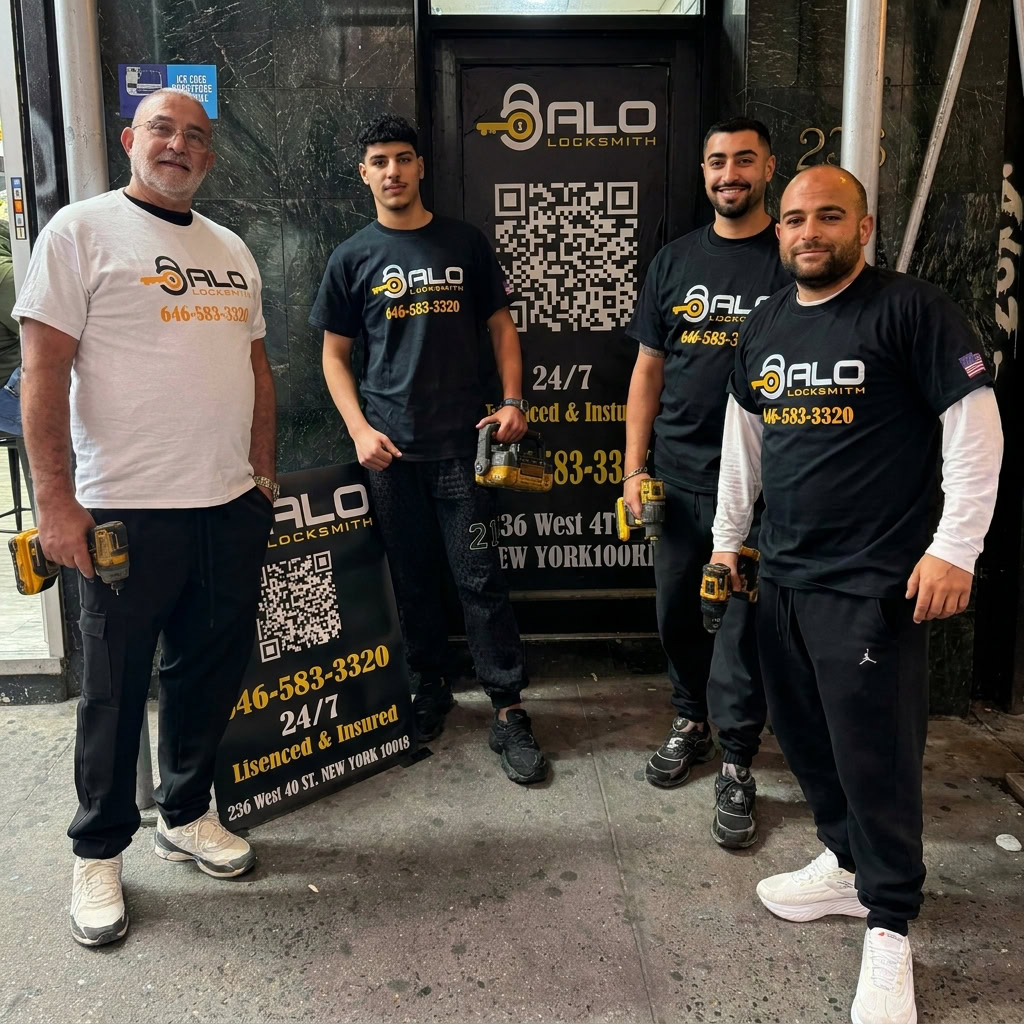
Manhattan storefronts take a beating. Not just from weather or delivery trucks, but from a very specific type of crime we’ve seen spike in cycles over the last decade. A car pulls up at 3 AM, someone jumps out with a brick or a crowbar, and in under ten seconds, a thousand dollars’ worth of glass is on the sidewalk and the inventory behind it is gone. If you own a retail space, a restaurant, or a gallery in this city, you’ve probably thought about this more than you’d like to admit.
The reality is that standard tempered glass, the stuff most storefronts are built with, isn’t designed to stop a determined person with a heavy object. It’s designed to break safely. That’s a problem when safety isn’t what you’re worried about at 2 AM. We’ve replaced enough shattered panes in SoHo and the Upper East Side to know that waiting for a break-in to upgrade your security is the most expensive lesson you can learn. The real question isn’t whether you need better protection; it’s which approach actually works without turning your store into a fortress that repels customers.
Key Takeaways
- Standard tempered glass is vulnerable to smash-and-grab attacks, often failing in under 10 seconds.
- Security film, laminated glass, and polycarbonate are the three primary solutions, each with distinct trade-offs in cost, clarity, and longevity.
- Local building codes in NYC, especially landmark restrictions, heavily influence what you can install.
- A hybrid approach—reinforced glass combined with a good alarm and lighting—usually outperforms any single solution.
Table of Contents
Why Tempered Glass Fails You
Tempered glass is everywhere in Manhattan storefronts because it’s cheap, it’s strong against wind loads, and when it breaks, it crumbles into small, relatively harmless pebbles. That last part is great for liability, terrible for security. A tempered glass pane under impact doesn’t bend or flex. It stores energy until it reaches a breaking point, then it explodes. We’ve seen guys hit a pane once with a hammer, and the whole thing collapses like a cheap ice rink.
The industry standard for tempered glass is about four times stronger than annealed glass against uniform pressure, but impact resistance is a different story. A sharp blow from a tool concentrates all that force into a tiny point. The glass has no way to absorb it. It just fails. This is why you see so many stores in the Village with metal roll-down gates. Those gates work, but they also make a place look like it’s closed for business even when it’s open. There’s a middle ground.
The Three Realistic Upgrades
We’ve installed all three of these systems across hundreds of doors in Manhattan, from tiny jewelry shops in the Diamond District to large clothing retailers on Fifth Avenue. Each one has a place, and each one has a downside that the sales brochures don’t mention.
Security Window Film
This is the most common retrofit we do. A thin polyester film, usually 8 to 15 mils thick, is applied directly to the existing glass. The adhesive is what does the work. When someone hits the glass, the film holds the shards together, creating a membrane that still has to be torn or cut through. A well-installed film can turn a one-second break into a thirty-second struggle. Most smash-and-grab crews work on a timer. If they can’t get through in under a minute, they usually move on.
The catch is that film doesn’t stop the glass from cracking. It just keeps it in place. The window still looks broken, and you’re still replacing it. Also, cheap film peels. We’ve seen installations from three years ago that look like someone shrink-wrapped a car window. The edges lift, the sun turns it purple, and it becomes an eyesore. Properly installed film from a reputable manufacturer, like 3M or Madico, lasts about ten years in direct sunlight. In a shaded doorway, it can last longer. Expect to pay between $8 and $15 per square foot installed in Manhattan, depending on access and the number of panes.
Laminated Glass
This is the gold standard for new construction. Two layers of glass with a polyvinyl butyral (PVB) interlayer sandwiched between them. It’s what car windshields are made of. When you hit it, the glass cracks, but the interlayer holds. You can hit it repeatedly, and it won’t create a hole big enough to reach through unless you’re using a saw. We’ve seen laminated glass take a full swing from a sledgehammer and only spiderweb.
The downside is weight and cost. Laminated glass is heavy. Your existing frame might not support it. Replacing a standard tempered pane with a laminated one often means re-engineering the door or window frame, which gets expensive fast. In a landmarked building in the West Village, you might not be allowed to change the glass thickness at all. That’s a real constraint we run into regularly. If you’re building out a new space, spec laminated glass from day one. Retrofitting it is usually a nightmare. Budget $25 to $45 per square foot, plus frame modifications.
Polycarbonate (Lexan)
This is the stuff they use in bank teller windows and prison glazing. It’s a clear plastic, not glass. It’s incredibly tough. You can hit it with a sledgehammer for five minutes and barely scuff it. For pure smash-and-grab resistance, nothing beats it. We’ve polycarbonate the entire ground floor of a electronics store on Canal Street, and the owner sleeps better than he ever did with a roll-down gate.
But polycarbonate scratches like crazy. You clean it with a paper towel, and it looks like you used sandpaper. After a year, it gets hazy. After three years, it looks terrible. It also expands and contracts with temperature changes, which means it can warp or pop out of its frame if not installed with proper expansion gaps. And it’s expensive. Expect $30 to $60 per square foot. For a high-traffic retail door that gets opened and closed hundreds of times a day, it’s usually a bad choice. For a fixed display window that rarely gets touched, it’s excellent.
Making the Right Choice for Your Space
There’s no universal best option. It depends on your building, your budget, and your tolerance for maintenance. Here’s a breakdown we use when talking to customers:
| Solution | Cost (Installed, NYC) | Impact Resistance | Longevity | Visual Clarity | Best For |
|---|---|---|---|---|---|
| Security Film (8-15 mil) | $8–$15/sq ft | Moderate (30-60 sec delay) | 5–10 years | Good, slight haze possible | Retrofitting existing glass, budget-conscious owners |
| Laminated Glass | $25–$45/sq ft + frame mods | High (multiple blows) | 15–20 years | Excellent, like standard glass | New construction or full frame replacement |
| Polycarbonate (1/4″ to 1/2″) | $30–$60/sq ft | Very High (sustained attack) | 3–5 years before hazing | Poor, scratches easily | Fixed display windows, low-traffic areas |
The trade-off is clear. Film is cheap and easy but not a permanent fix. Laminated glass is the best all-around if you can afford the frame work. Polycarbonate is a specialty tool for specific problems. We’ve seen too many people buy the cheapest film online, install it themselves, and wonder why it failed in six months. That’s not a product failure, that’s a planning failure.
The Local Reality: NYC Codes and Landmarks
This is where a lot of DIY plans fall apart. The NYC Department of Buildings has specific requirements for storefront glazing, especially regarding fire ratings and egress. If you’re replacing a door that leads to a public hallway, you might need fire-rated glass. Film can void the fire rating of a window. That’s a real issue we’ve dealt with multiple times on the Upper West Side.
If your building is in a historic district, like the Ladies’ Mile or the South Street Seaport, the Landmarks Preservation Commission has to approve any change to the storefront. We’ve had clients who wanted to install a roll-down gate but were denied because it changed the character of the street. In those cases, laminated glass or a high-end security film is often the only option. And you can’t just call a contractor. You need an expeditor, a filing, and a waiting period. It’s a pain, but it beats a fine or a stop-work order.
Common Mistakes We See Repeatedly
We’ve been doing this long enough to see the same errors over and over. Here are the big ones:
Assuming film is a permanent solution. It’s not. It degrades. Plan to replace it every 7-10 years. If you’re leasing your space, that’s probably fine. If you own the building, consider laminated glass for the long haul.
Ignoring the frame. The strongest glass in the world is useless if the door frame is hollow aluminum. We’ve seen laminated glass hold, but the door itself buckled because the hinges were cheap. Reinforce the frame and hinges at the same time.
Forgetting about the back door. Smash-and-grab crews know that the front window has the expensive glass. They’ll walk around the block and hit a side door with a single pane of cheap glass. We’ve replaced more back-door glass than front windows. Don’t be that person.
Buying the cheapest option online. Security film is not all the same. The adhesive matters. The installation matters. A professional install with a pressure-sensitive adhesive and proper edge sealing is worth the extra money. We’ve seen DIY film peel off in a heatwave. It’s not a fun call to get from a customer at midnight.
When Professional Installation Is Non-Negotiable
You can hang a picture. You can paint a wall. You can even change a lock. But reinforcing a storefront against break-ins is not a weekend project. The tolerances are tight. The adhesives require clean, temperature-controlled conditions. A single air bubble under security film creates a weak point. A polycarbonate sheet cut too tight will bow. A laminated glass panel installed in a frame that wasn’t designed for the weight can shatter from thermal stress.
We’ve seen the aftermath of DIY attempts. A customer in Tribeca tried to install film himself. It lasted three months. When the police reviewed the security footage, the intruder just pushed his hand through a seam where the film had lifted. That’s a $10,000 loss because someone wanted to save $500 on labor.
If you’re in a high-risk area—near a subway entrance, on a quiet side street, or in a neighborhood with a recent spike in commercial burglaries—hire a professional. ALO Locksmith located in Manhattan, NYC handles this exact situation regularly. We’ve done installations from Battery Park to Harlem. The cost of a professional install is almost always less than the deductible on one burglary claim.
Alternatives Worth Considering
Not every storefront needs ballistic glass. If your budget is tight or your landlord won’t approve modifications, there are other layers of defense.
Exterior lighting. A bright LED floodlight with a motion sensor is cheap and effective. Most thieves avoid well-lit storefronts. Pair it with a camera that’s visible from the street.
Interior gates or grilles. You don’t have to put a gate on the outside. A scissor gate mounted inside the door, behind the glass, provides a second barrier without changing the exterior look. It’s not as strong as a roll-down, but it’s a deterrent.
Alarm system with glass-break sensors. This won’t stop the break-in, but it will limit the time the thief has to grab merchandise. In Manhattan, police response times vary wildly, but a loud alarm often scares off amateurs.
High-security locks. A storefront door with a standard key-in-knob lock is a joke. Upgrade to a deadbolt with a hardened steel bolt and a reinforced strike plate. We’ve seen doors that looked secure but the lock pulled right out of the wood frame. That’s a five-minute fix with longer screws and a metal plate.
When Reinforced Glass Isn’t the Answer
There are situations where reinforcing the glass makes no sense. If your store is on a block with twenty-four-hour foot traffic and a doorman next door, the risk is low. The money might be better spent on inventory insurance or a better camera system.
Also, if your lease is up in six months, don’t spend thousands on laminated glass. A good security film will get you through the lease term, and you can take it with you if you’re careful. We’ve removed film from one store and reinstalled it in another. It’s not ideal, but it’s possible.
And if your building has a history of flooding or moisture issues, be careful with film. Moisture trapped behind the film can cause the glass to develop “fog” or delaminate. We’ve seen beautiful installations ruined by a leaky window frame. Fix the leak first, then reinforce.
Final Thoughts
Securing a Manhattan storefront is a balancing act. You want to protect your inventory and your peace of mind without making your space feel like a bunker. The right solution depends on your building, your budget, and your specific risk. We’ve seen too many store owners panic after a break-in and install something that doesn’t fit their needs. Take a breath. Assess the vulnerabilities. Talk to someone who has done this before.
If you’re in the five boroughs and you’re not sure where to start, we can help you think it through. ALO Locksmith in Manhattan, NYC has been doing this work for long enough to know what holds up and what doesn’t. The goal isn’t to sell you the most expensive option. It’s to get you the right one. Because at the end of the day, you want to open your store in the morning and find exactly what you left the night before.
