
Table of Contents
Why Standard Hardware Store Locks Fail in Manhattan
Standard retail hardware locks fail in Manhattan apartments because budget pin-tumbler deadbolts utilize thin cast zinc components, offer zero protection against lock bumping, and rely on unrestricted keyways. These entry-level locksets easily shear under basic torque tools, while uncontrolled keys allow former tenants or third-party contractors to cut unauthorized duplicates at neighborhood kiosks.
The structural construction of off-the-shelf locks provides minimal resistance against aggressive physical intrusion methods. In low-cost deadbolt models, internal pot-metal drive mechanisms fracture quickly under violent impact, while soft steel bolts can be sawed through using basic hand tools. Furthermore, unrated five-pin keyways lack hardened steel anti-drill pins, leaving the lock cylinder completely exposed to high-speed drill bits.
Upgrading to commercial high-security locking hardware solves these three vulnerabilities in a single installation. High-security locking systems combine hardened steel alloy housings to resist physical destruction, intricate dual-locking cylinders to defeat non-destructive picking, and patented key designs that restrict key duplication exclusively to verified property owners.
Key Selection Criteria for NYC Apartment Locks
Evaluating high-security locks for a Manhattan apartment requires analyzing four critical technical benchmarks: ANSI/BHMA Grade 1 durability ratings, UL 437 attack resistance, patented key duplication restriction, and heavy-duty structural frame reinforcement compatibility. Meeting these four combined criteria guarantees that an apartment front door resists both violent physical impacts and silent non-destructive lock picking attempts.
ANSI/BHMA Grade 1 Certification
ANSI/BHMA Grade 1 certification establishes the maximum mechanical performance standard for auxiliary residential deadbolts tested by independent hardware laboratories. According to the Builders Hardware Manufacturers Association (BHMA) ANSI/BHMA A156.36 standard, a Grade 1 deadbolt must endure 250,000 mechanical operation cycles and withstand 1,350 pounds of static force applied directly against the bolt.
Grade 2 locksets pass testing at only 150,000 operational cycles and 800 pounds of static force, while Grade 3 consumer locks pass at 100,000 cycles and 500 pounds. For a Manhattan entryway subject to continuous foot traffic and high impact risks, Grade 1 mechanical hardware provides essential structural integrity.
UL 437 Listing for High Security
The UL 437 listing from Underwriters Laboratories certifies that a lock cylinder successfully resists rigorous physical attacks, including mechanical picking, high-speed drilling, housing pulling, and direct prying. Cylinders earning this distinction integrate hardened steel drill pins, anti-pick sidebars, and reinforced steel housings engineered specifically to prevent forced entry across multi-tenant buildings.
Standard residential cylinders fail UL 437 laboratory testing within seconds when targeted with hardened steel drill bits or manual lock-picking tools. Choosing a UL 437 listed lock gives our clients third-party verified physical defense for high-risk residential entry points.
Restricted Key Control
Restricted key control prevents unauthorized duplicate key creation through utility patents and strict legal distribution agreements backed by property registration cards. When we install restricted key systems, key blanks are released only by authorized security dealers who verify physical ownership documentation before milling custom keyways on specialized key-cutting machinery.
In multi-tenant Manhattan buildings where keys pass through numerous hands during apartment turnovers, restricted keyways deliver total audit control over physical keys. Without presenting a factory registration card or verified signature, retail kiosks and hardware shops cannot supply key duplicates.
Door Frame and Strike Plate Compatibility
High-security deadbolt performance relies entirely on deep structural door frame anchoring to prevent forced entry caused by frame splitting during door kick-ins. Over seventy percent of forced residential break-ins target fragile wooden jambs, requiring our technicians to anchor heavy-duty steel strike plates directly into structural wall studs using three-inch hardened screws.
When we mount Grade 1 hardware, we position full-length reinforcement plates that transfer impact energy into 2×4 framing behind the jamb. This installation protocol prevents soft decorative casing trims from splintering under localized blunt force.
Top Lock Brands Recommended for NYC Apartments
Through our extensive field operations across Manhattan, we have selected Medeco, Mul-T-Lock, Schlage commercial lines, and Abloy as the premier lock manufacturers for urban residential security. These industry-leading brands deliver proven physical resistance against drill attacks, bump keys, violent impacts, and unauthorized key duplication across apartment buildings.
Medeco: The Rotating Pin Standard for Manhattan Properties
Medeco deadbolts establish a benchmark in residential high-security protection through patented rotating pin tumbler mechanisms that require simultaneous elevation and precise axial rotation to open. Models such as the Medeco Maxum incorporate hardened steel cylinder inserts and solid steel bolts engineered to withstand aggressive drilling, metal sawing, and heavy prying force.
Duplicating Medeco key blanks requires presenting an original factory authorization card at verified locksmith facilities. Keyways feature utility patent protection, ensuring that raw key blanks remain unavailable to unauthorized commercial key-milling kiosks.
- Medeco Maxum: Features rotating pin tumblers, sidebar locking, ANSI Grade 1 certification, and UL 437 listing for ground-floor security.
- Medeco M4: Combines rotating pin technology with an inner sidebar and hardened drill inserts, ideal for luxury co-op entryways.
- Medeco Classic: Employs foundational rotating pin mechanical design for cost-effective restricted keyway security upgrades.
Mul-T-Lock: Telescopic Pin Engineering and Precise Key Control
Mul-T-Lock utilizes advanced telescopic pin-within-a-pin cylinder technology that creates multiple shear lines simultaneously to defeat conventional picking and bumping techniques. The Mul-T-Lock MT5+ series incorporates a moving alpha spring element within the key blade alongside an active sidebar mechanism, delivering maximum key duplication control for residential properties.
The heavy-duty construction of Mul-T-Lock Hercular deadbolts incorporates hardened steel ball bearings that interlock the bolt body into the strike frame. This structural locking design effectively withstands severe prying attacks using mechanical crowbars.
- Mul-T-Lock MT5+: Uses telescopic pins, alpha spring elements, and sidebar locking for top-tier key restriction across rental buildings.
- Mul-T-Lock Interactive+: Features active key inserts and patented key control, designed for standard Manhattan interior entry doors.
- Mul-T-Lock Hercular: High-strength steel deadbolt housing with interlocking frame bolts, engineered for vulnerable ground-level entryways.
Schlage: Commercial-Grade Security at Residential Price Points
Schlage commercial Grade 1 deadbolts provide high structural strength and reliable physical endurance at an accessible price point for Manhattan tenants. In the Lifestory Research 2026 America’s Most Trusted Study, Schlage was named the most trusted door lock brand for the seventh consecutive year with a Net Trust Quotient Score of 117.0 based on 7,209 consumer evaluations.
The Schlage B60N deadbolt features an anti-bump pin cylinder and a solid one-inch throw bolt containing a hardened steel roller pin. Upgrading to the Schlage Primus line integrates a secondary sidebar keyway that provides restricted key duplication management.
- Schlage B60N: Grade 1 deadbolt featuring a standard five-pin cylinder, offering affordable physical security for rental apartments.
- Schlage B660: Heavy-duty commercial Grade 1 deadbolt engineered for long-term mechanical durability on high-traffic apartment doors.
- Schlage Primus: Grade 1 lockset utilizing a dual-sidebar cylinder mechanism to enforce strict key duplication control on moderate budgets.
Abloy Protec2: Rotating Disc Technology for Maximum Security
Abloy Protec2 deadbolts eliminate traditional pin tumblers entirely, utilizing eleven rotating detainer discs that align precise key cuts to form a solid steel locking bar. This master keying mechanism contains zero springs to pick or bump, making the Abloy Protec2 system virtually immune to non-destructive picking methods during field testing.
Key creation is restricted through factory-controlled keyways that require master authorization security cards. The cylinder housing contains hardened steel shielding that destroys high-speed steel drill bits upon physical contact.
- Abloy Protec2 Deadbolt: Rotating disc cylinder with hardened steel casing, built for high-value asset protection.
- Abloy Protec2 Mortise: Disc detainer cylinder retrofitted for vintage pre-war mortise locksets, ideal for Manhattan historic building restorations.
- Abloy Classic: Original disc detainer mechanism, offering robust physical pick resistance at an entry-level price point.
Smart Locks vs. Mechanical Locks in NYC
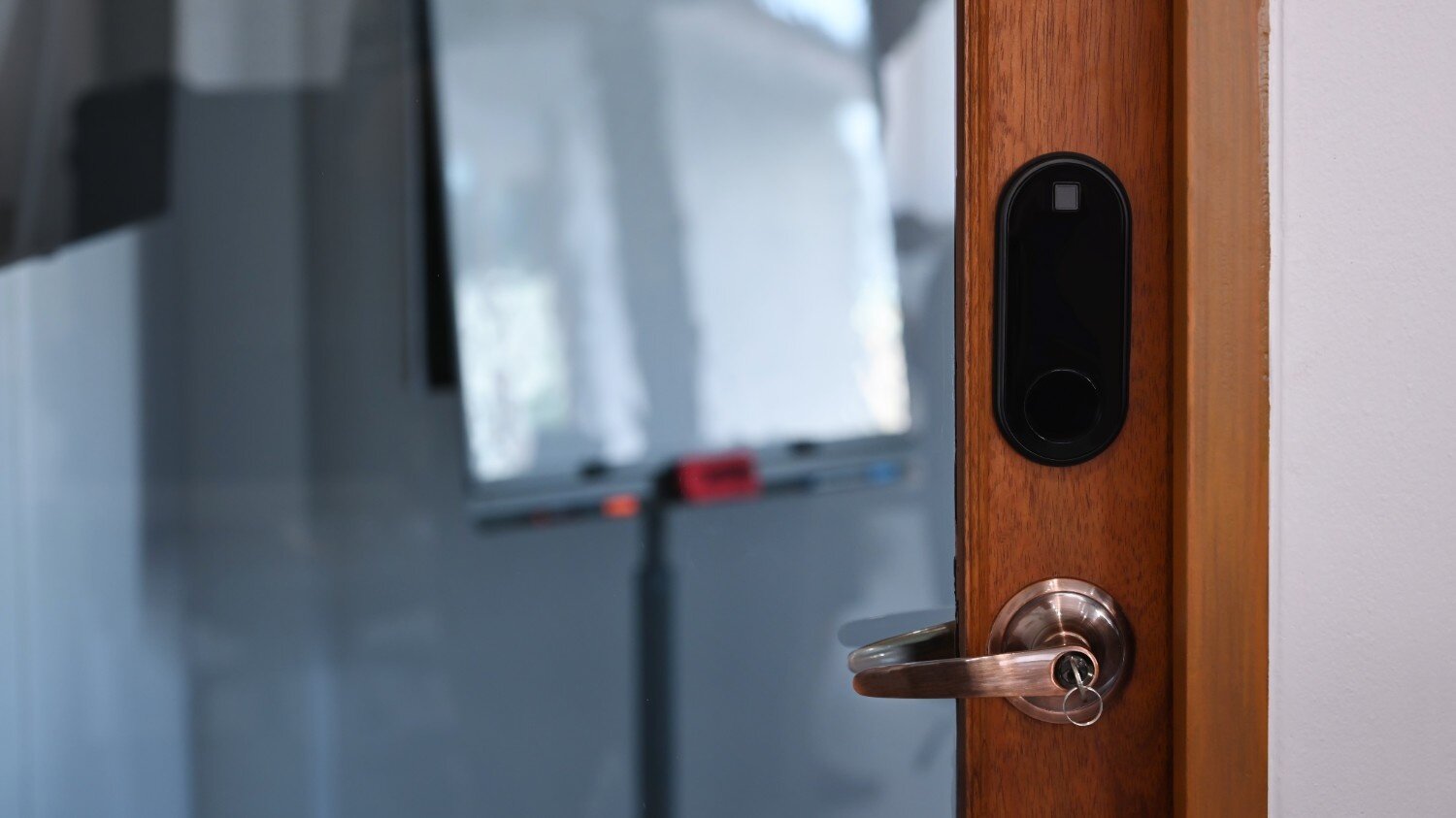
Smart locks provide keyless digital convenience and access logging for Manhattan apartments, but electronic components introduce battery dependencies and wireless network considerations. While models like the Schlage Encode Plus achieve ANSI Grade 1 physical strength and Apple HomeKey integration, heavy-duty mechanical deadbolts still deliver superior physical pick resistance and key restriction controls.
When evaluating smart lock hardware for apartment doors, battery depletion rates and building Wi-Fi stability must be considered. Retrofit smart locks mount to existing interior tailpieces, maintaining exterior mechanical cylinders while enabling mobile app management for tenants.
| Smart Lock Model | ANSI Grade Rating | Mechanical Key Override | Keyway Restriction | Ideal Manhattan Application |
|---|---|---|---|---|
| Schlage Encode Plus | Grade 1 | Yes (Standard Cylinder) | Standard Keyway | Smart home users, Apple ecosystem |
| Yale Assure Lock 2 | Grade 2 | Yes (KeyMark Option) | Restricted Option | Modular access, multi-user entry |
| August Smart Lock | Retrofit (Varies) | Retains Original Cylinder | Depends on Cylinder | Renters retaining landlord locks |
| Ultraloq Bolt | Grade 2 | Yes (Standard Cylinder) | Standard Keyway | Biometric fingerprint preference |
Field Notes and Real-World Field Resolution Examples
Resolving door security issues across Manhattan requires custom locksmith engineering due to historical building architectures, settle-warped door frames, and legacy mortise cutouts. Over years of field service, our technicians have resolved complex locking failures by crafting custom strike alignments, retrofitting high-security cylinders into pre-war mortise boxes, and reinforcing structural timber jambs.
In an Upper West Side pre-war apartment, we encountered a century-old cast-iron mortise lock housing set inside an out-of-plumb solid oak door frame. Standard rim deadbolts could not align due to narrow frame clearances, and the original mortise cylinder was obsolete. We resolved this failure by machining a custom brass adapter ring and retrofitting an Abloy Protec2 mortise cylinder directly into the restored mortise box, preserving historic aesthetics while maximizing pick resistance.
In an East Village walk-up building, frequent tenant turnover left an entry door frame severely splintered from multiple surface-mounted lock installations. The door could be kicked open easily despite a Grade 1 deadbolt because the wooden jamb was structurally destroyed. We resolved this vulnerability by removing damaged casing trim, mounting a full-length steel door jamb armor kit secured with four-inch structural lag screws into wall studs, and installing a Medeco Maxum deadbolt.
NYC Building Codes and Tenant Lock Rights
New York City residential building regulations establish precise statutory rules regarding hardware installations, key distribution requirements, and landlord access rights across all five boroughs. Landlords must meet mandatory security hardware standards, while tenants maintain the legal right to install custom locks provided working key duplicates are supplied to building management upon request.
Under New York City Administrative Code Section 27-2043, owners of Class A multiple dwellings must equip apartment entrance doors with a heavy-duty latch set and a heavy-duty deadbolt operable by key outside and thumb-turn inside, along with a chain door guard. Furthermore, New York State Multiple Dwelling Law Section 51-c grants tenants the statutory right to install and maintain an auxiliary lock on their entrance door, provided a duplicate key is provided to the landlord upon written request.
- NYC Housing Maintenance Code Section 27-2043 mandates owners to equip Class A dwellings with a key lock, minimum one key provided, heavy-duty latch set, deadbolt with interior thumb-turn, and chain guard.
- New York State Multiple Dwelling Law Section 51-c establishes a tenant’s statutory right to add a separate auxiliary lock not exceeding three inches in circumference, provided duplicate key access is given to the landlord upon written request.
Lock Brand Comparison Matrix
Comparing high-security lock brands across performance metrics allows property owners and renters to evaluate physical strength, key restriction, cost, and installation requirements side by side. Selecting the right lock requires matching specific mechanical features against apartment security risk factors, building architectural types, and overall project budgets in Manhattan apartments.
| Feature / Metric | Medeco Maxum | Mul-T-Lock MT5+ | Schlage B60N | Abloy Protec2 | Schlage Encode Plus |
|---|---|---|---|---|---|
| ANSI/BHMA Grade | Grade 1 | Grade 1 | Grade 1 | Grade 1 | Grade 1 |
| UL 437 Rating | Yes | Yes | No | Yes | No |
| Mechanism Type | Rotating Pin | Telescopic Pin | Standard Pin | Rotating Disc | Electronic + Pin |
| Key Restriction | Patented Card | Patented Card | Standard | Factory Controlled | Standard |
| Drill/Pick Resistance | Excellent | Excellent | Moderate | Maximum | Moderate |
| Base Installed Cost | 175 US dollars | 160 US dollars | 80 US dollars | 275 US dollars | 299 US dollars |
| Installation Effort | Professional Required | Professional Required | Standard DIY/Pro | Professional Required | Professional Recommended |
Decision Framework: Choosing the Ideal Lock for Your Situation
Selecting the ideal lock for a Manhattan apartment requires analyzing building entry exposure, lease terms, budget parameters, and door framing conditions before buying hardware. Renters needing non-destructive upgrades require different physical hardware than co-op owners installing permanent high-security restricted key systems into pre-war mortise assemblies.
- Renters on a Budget: If you require affordable entry defense without permanent frame alterations, select the Schlage B60N Grade 1 deadbolt secured with three-inch strike screws; if your lease restricts cylinder changes, install a retrofit smart lock over your existing tailpiece.
- Ground-Floor and Rear-Yard Apartments: If your unit opens to street level, garden courtyards, or fire escapes, maximize structural defense by installing a Medeco Maxum or Mul-T-Lock MT5+ deadbolt paired with steel frame jamb armor.
- Co-op and Condo Owners: If you own your unit and management maintains master key hierarchies, choose a Mul-T-Lock MT5+ or Medeco M4 mortise cylinder tailored to integrate with existing building security suites.
- High-Asset Security Requirements: If you preserve high-value items or require absolute protection against key copying, select the Abloy Protec2 rotating disc detainer system.
Frequently Asked Questions
What is the single best lock for an NYC apartment?
The Medeco Maxum and Mul-T-Lock MT5+ represent the overall best locks for NYC apartments due to their ANSI Grade 1 ratings, UL 437 attack resistance, and restricted keyways. For budget-conscious renters, the Schlage B60N Grade 1 deadbolt delivers strong physical force resistance at a lower price point. Property owners requiring ultimate pick resistance should opt for the Abloy Protec2 rotating disc cylinder.
Can a landlord legally prevent tenants from changing locks in NYC?
No, landlords in New York City cannot legally prohibit tenants from installing or replacing entrance door locks under New York State Multiple Dwelling Law Section 51-c. However, tenants are required to provide a duplicate key copy to building management upon written request. Failing to provide a duplicate key violates statutory tenant obligations and lease terms.
Should new tenants rekey their locks upon moving into a Manhattan apartment?
Yes, rekeying or replacing lock cylinders immediately after moving into a Manhattan apartment is essential to guarantee home safety. Former tenants, maintenance workers, real estate agents, and contractors may hold uncollected key duplicates to standard unrestricted locksets. Installing new cylinders invalidates old keys and restores total access control to the current occupant.
Are smart locks secure enough for NYC apartments?
Smart locks built to ANSI Grade 1 standards, such as the Schlage Encode Plus, deliver robust physical security suitable for Manhattan apartments. However, electronic locks introduce potential failure points like battery depletion and wireless connectivity interruptions that mechanical locks do not have. For maximum entry defense, smart locks should be paired with physical high-security mechanical overrides.
How much does professional lock installation cost in Manhattan?
Professional deadbolt installation labor in Manhattan typically costs between 80 US dollars and 120 US dollars, excluding hardware prices. Installing high-security cylinders like Medeco or Mul-T-Lock units ranges from 160 US dollars to 220 US dollars depending on door prep work. Complex pre-war mortise retrofits or full steel frame armor installations generally start at 250 US dollars.
Sources
- Builders Hardware Manufacturers Association (BHMA): ANSI/BHMA A156.36 Standards for Auxiliary Locks. https://buildershardware.com
- Lifestory Research: 2026 America’s Most Trusted Door Lock & Hardware Study. https://www.lifestoryresearch.com
- New York City Administrative Code: Section 27-2043 (Locks in Dwelling Unit Doors). https://codelibrary.amlegal.com/codes/newyorkcity
- New York State Senate: Multiple Dwelling Law Section 51-c (Rights of Tenants to Install and Maintain Locks). https://www.nysenate.gov/legislation/laws/MDW/51-C
Related Articles
Airbnb Host Lock Management In NYC: Smart Lock Automation And Guest Access
The Best Keyless Entry Systems For NYC Landlords: A Complete Guide
Keyless Entry Upgrades For NYC Co-ops: Navigating Board Approval And Installation
People Also Ask
For the most reliable lock brand, industry professionals often point to Schlage and Medeco for their robust security features and durability. Schlage offers a wide range of residential and commercial locks with strong build quality, while Medeco specializes in high-security cylinders that are resistant to picking and drilling. However, reliability also depends on the lock's ANSI Grade. A Grade 1 lock offers the highest level of security for commercial use, while Grade 2 is suitable for light commercial or heavy residential. For a deeper understanding of these standards, you can refer to our internal article titled ANSI Lock Grades Explained By ALO Locksmith For NYC Buildings. ALO Locksmith Services Manhattan NYC always recommends selecting a lock that matches your specific door type and security needs.
For apartment dwellers in Manhattan, the best smart lock balances security, convenience, and landlord compliance. A keyless entry system with a built-in keypad is often the top choice, as it allows you to grant temporary access codes to guests or service providers without needing physical keys. Look for models with strong encryption and a manual key override for emergencies. Many modern units also integrate with popular home automation hubs. For a detailed breakdown of securing interior spaces, including file rooms, you can refer to our internal article titled The Best Locks For Interior Office Doors And File Rooms. Ultimately, ALO Locksmith Services Manhattan NYC recommends verifying your lease agreement before purchasing, as some buildings restrict modifications to the primary deadbolt.
For the highest level of residential security, a Medeco lock is widely considered the most secure option for a standard door. These locks feature a patented key control system, meaning duplicate keys cannot be cut without your authorization. They also use hardened steel inserts to resist drilling and a unique sidebar mechanism that prevents picking and bumping. For a detailed explanation of their technology and security features, please refer to our internal article What Is A Medeco Lock And Why Is It So Secure?. While no lock is impenetrable, a Medeco cylinder combined with a reinforced strike plate and a solid core door provides an excellent defense against forced entry. ALO Locksmith Services Manhattan NYC can advise on the best high-security system for your specific property.
For the Manhattan market, a good lock brand is one that balances security with durability against urban wear and tear. Industry leaders include Schlage and Medeco for high-security residential and commercial use, as they offer robust pick resistance and ANSI Grade 1 or 2 certifications. For budget-friendly reliability, Kwikset provides decent Grade 3 options. However, the best brand depends on your specific door type and required security level. For a detailed breakdown of how these brands compare in strength and certification, we recommend reviewing our internal article titled ANSI Lock Grades Explained By ALO Locksmith For NYC Buildings. ALO Locksmith Services Manhattan NYC always advises matching the lock brand to the door's fire rating and local building codes for optimal protection.
For landlords and property managers in Manhattan, the best smart locks in 2026 prioritize robust security, remote access, and integration with building management systems. Keyless entry systems from top-tier brands now offer features like temporary digital keys for maintenance staff, audit trails for security, and tamper alarms. When selecting a smart lock, ensure it is BHMA Grade 1 certified for durability and supports the latest encryption standards to prevent hacking. A critical resource for navigating these options is our internal article titled 'The Best Keyless Entry Systems for NYC Landlords: A Complete 2026 Guide', which you can find at The Best Keyless Entry Systems for NYC Landlords: A Complete 2026 Guide. ALO Locksmith Services Manhattan NYC recommends consulting this guide to match a lock's features with your specific building's access control needs.
For managing an August Smart Lock in a Manhattan rental property, the key is to integrate it with a centralized access platform. This allows you to issue unique digital keys to guests, set automatic schedules for check-in and check-out, and monitor lock activity remotely. It is crucial to have a backup plan, such as a physical key override, in case of battery failure or connectivity issues. For a comprehensive guide on implementing these systems for your property, we recommend reviewing our internal article titled Airbnb Host Lock Management In NYC: Smart Lock Automation And Guest Access. ALO Locksmith Services Manhattan NYC can assist with professional installation and configuration to ensure your smart lock system is secure and reliable for all your guests.
For homeowners in Manhattan considering a retrofit smart lock, the best options are those that replace only the interior thumb turn while preserving your existing exterior keyed cylinder. This is ideal for renters or those wanting to keep their current keys. Top choices include the August Wi-Fi Smart Lock (4th Generation) and the Level Bolt, both of which fit over your existing deadbolt. For professional advice on managing guest access, ALO Locksmith Services Manhattan NYC recommends reviewing our internal article Airbnb Host Lock Management In NYC: Smart Lock Automation And Guest Access for comprehensive guidance. Ensure the lock is compatible with your door's backset and crossbore, and always verify it supports your preferred smart home platform like Apple HomeKit or Amazon Alexa.
For the best smart door lock with a handle, consider models that combine a keyless entry system with a sturdy lever for ADA compliance and ease of use. Look for features like built-in Wi-Fi, Bluetooth, or Z-Wave connectivity for remote access and integration with home automation systems. A touchscreen or fingerprint reader offers quick, secure entry without a physical key. Ensure the lock supports a backup key override and has robust encryption to prevent hacking. For property owners in Manhattan, managing multiple guest codes is essential. For detailed guidance on this, please refer to our internal article Airbnb Host Lock Management In NYC: Smart Lock Automation And Guest Access. ALO Locksmith Services Manhattan NYC recommends professional installation to guarantee proper alignment and security.
